Blog
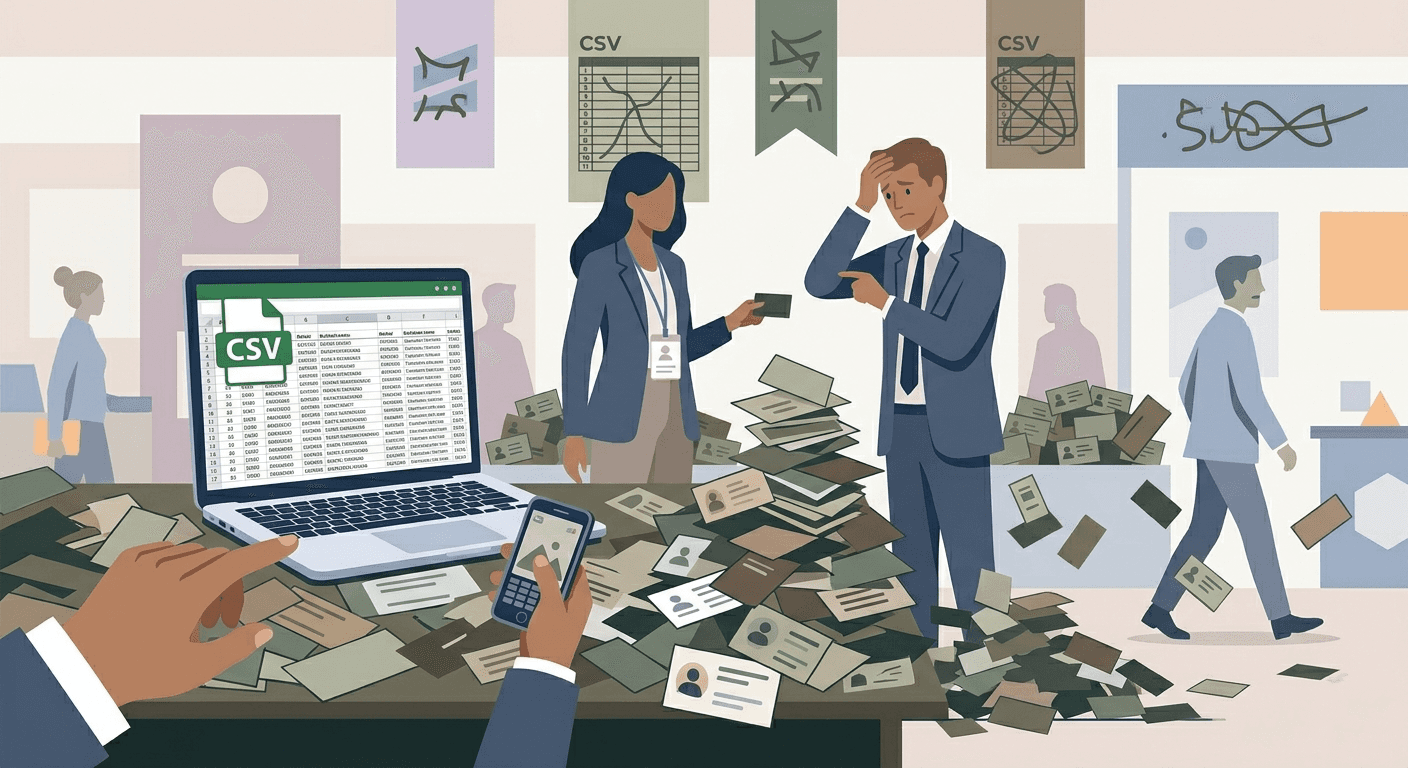
Most networking conversations end the same way: both sides mean well, exchange cards or badges, and plan to follow up. A week later, the card is in a pile. The badge scan is in a CSV nobody opened. The follow-up never happened.
This is not a motivation problem. It is a system problem. The best networking follow-up tips do not tell you to be more persistent or write better subject lines. They tell you to fix what happens in the first five minutes after a conversation ends, because that is when the context that makes personalized outreach possible either gets captured or disappears.
The data on what separates great networkers from average ones points to the same few habits, consistently. Here is what they are and how to build them into your team's capture workflow.
TL;DR |
- Follow-up speed matters more than follow-up length. First touch within 24 hours outperforms everything sent on Day 3 or later. |
- Context captured at the moment of meeting drives better personalization and higher reply rates. |
- A 3-to-6 field capture schema (interest, product line, priority, owner) is enough to make lists actionable. |
- Voice notes at capture give reps the context to personalize at speed without typing notes in a rush. |
- Duplicate contacts in the CRM waste dials and damage sender reputation. Clean before import, not after. |
Great networkers are not more charismatic. They have a better system. Here is what the data says about follow-up timing, context, and what to fix.
The problem is not that people forget to follow up. It is that by the time they sit down to do it, the context is gone.
Think about how most event leads are captured today: a badge scan that returns only a name and company, a stack of visiting cards photographed on a phone, or scattered follow-up details saved across notes, chats, and LinkedIn profiles. None of these tell you what you talked about, what they were interested in, or what the right next step is.
When context is missing, follow-up becomes generic. Generic follow-up gets ignored. The conversation that felt warm on Day 0 is cold by Day 3.
There is also a compounding problem: the longer the gap between capture and action, the more leads a team has to process at once, and the less likely they are to do it well. A rep who captures fifty conversations over two days at an exhibition and then tries to write personalised follow-ups on Day 4 is starting from scratch. A rep who spends thirty seconds adding context at the moment of each conversation is starting from a position of strength.
The follow-up speed and relevance are the two variables that matter most. Speed without context produces spam. Context without speed produces regret. The system that delivers both is what this post is about.
How to follow up after a networking event: what the data says
Studies on sales follow-up consistently show that first touch within 24 hours produces significantly higher response rates than outreach sent on Day 3 or later. The same pattern holds for event networking. The leads you met on Day 1 are still thinking about their problem on Day 1. By Day 4, they have moved on.
But speed alone is not the answer. Reps who send fast, context-free messages do not outperform reps who send thoughtful messages three days later by much. The reps who consistently win combine both: they capture context at the point of conversation, then act on it the next morning.
What does context look like in practice? It is not a lengthy note. It is three to four data points captured in under a minute:
What they were interested in (product, use case, or problem)
How urgent or relevant the conversation felt (a simple Hot / Warm / Cold label is enough)
What the agreed next step is (send a deck, book a demo, make an intro)
A 10-second voice note with anything else worth remembering
That is the capture schema that makes Day-1 follow-up personal and fast. Without it, even a 9am outreach feels like a template.
One more thing worth noting: the 24-hour window is not just about the lead's attention span. It is also about your team's. The rep who captured eighty conversations over three days and tries to do all follow-up on Day 5 will do it poorly. The team that exports a mapped list and starts outreach on Day 1 does it well, because the context is still live.
One of the most common mistakes in event networking is treating the contact list as the deliverable. It is not. The contact list is raw material. The deliverable is a prioritized, context-rich list that tells your team what to do next, and in what order.
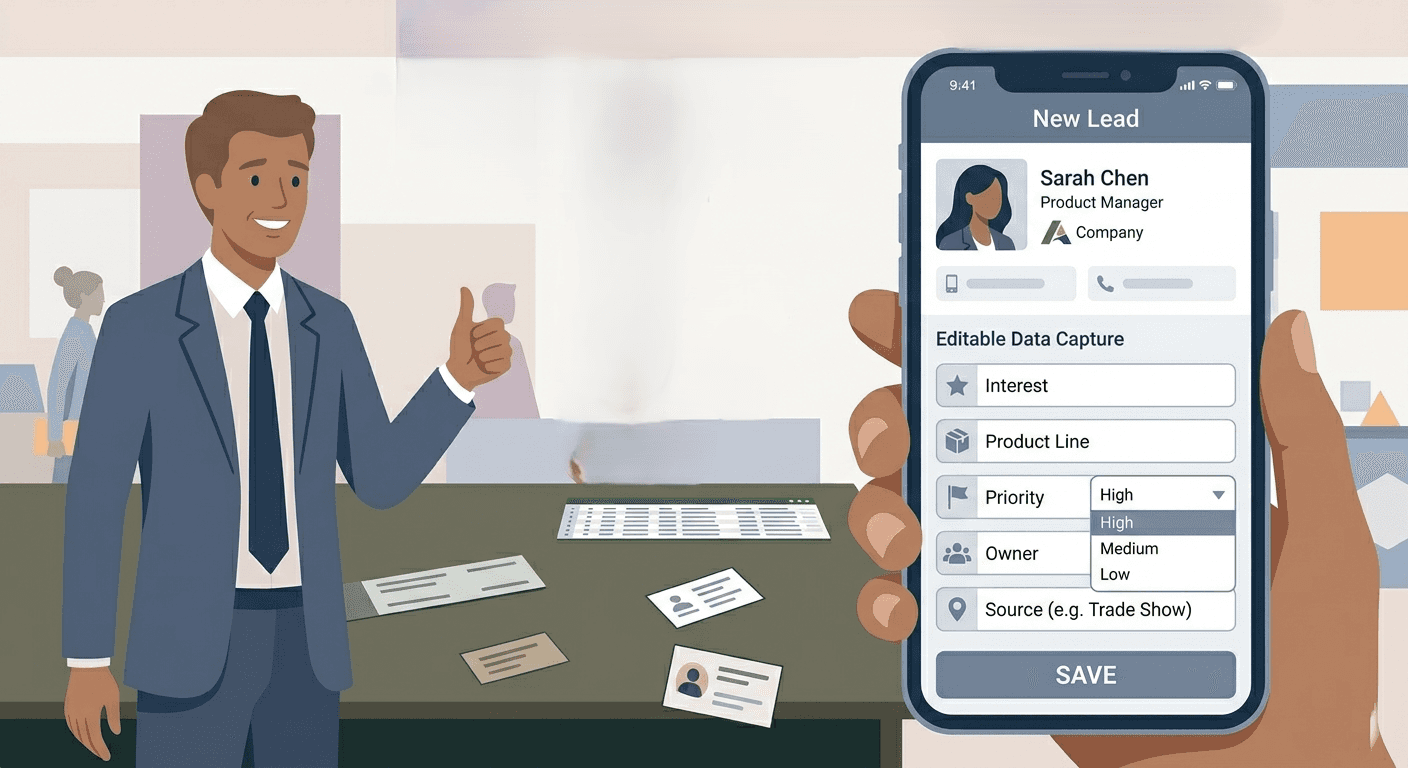
The difference between a raw list and an actionable one usually comes down to whether Intent Signals were captured at the point of conversation. These are not complicated fields. A well-designed capture schema for an exhibition typically needs six:
Interest: Interest or use case
Product Line: Interested product
Priority: Priority or urgency tier
Owner: Owner (who is following up)
Source: Source (which event or campaign)
Stall No.: Stall number or session for context
These Intent Signals sound simple. But filling them at capture time, not the night before the CRM import, is what makes them useful. Memory fades fast. Qualifiers captured in the moment are accurate. Qualifiers added two days later are guesses.
The same principle applies to teams in India capturing visiting cards at exhibitions. Visiting card follow up in India tends to follow the same failure pattern: the card gets scanned or photographed, no Intent Signals get added, and the follow-up is generic or late. The visiting card is not the problem. The absence of a qualification step is.
Once you have a consistent 6-field schema, something useful happens: you can filter and prioritize before a single message is sent. Instead of working through a list alphabetically, your SDR opens the "Hot + Demo" saved search and works from the top. The contacts who are most likely to convert get the fastest outreach.
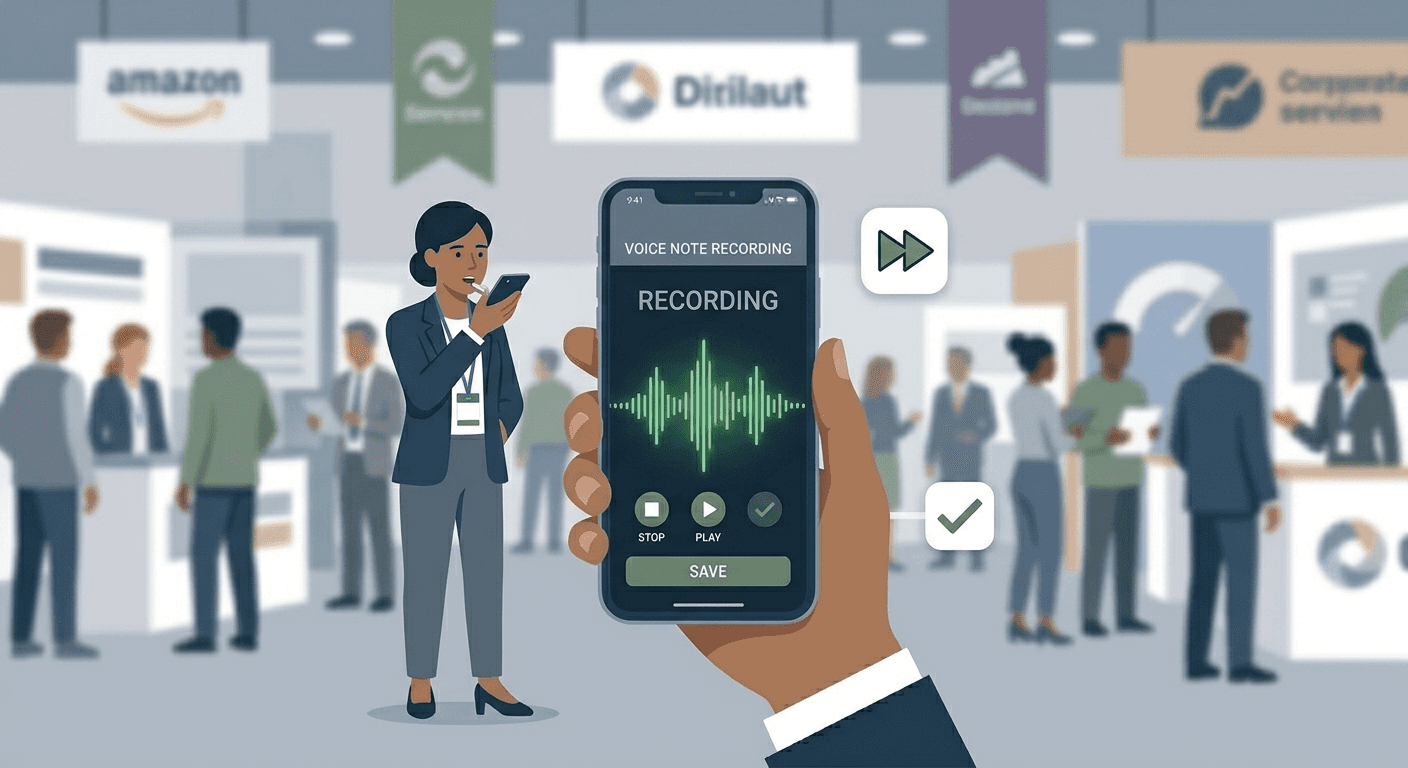
Typing notes at a busy stall or exhibition is slow and often impractical. A 10-second voice note recorded immediately after a conversation does more for next-day personalization than five minutes of typing two hours later.
The reason is specificity. A voice note captured in the moment holds tone, detail, and intent in a way that typed summaries rarely do. "She asked specifically about pricing for a 15-seat team and wants a demo before month end" is more useful than "interested in Pro plan." The first tells an SDR how to open the call. The second does not.
Voice notes also solve the rush-hour problem. At peak footfall, the gap between conversations can be thirty seconds. Typing anything meaningful in that time is not realistic. Tapping record and speaking for ten seconds is. That recording, attached to the contact and paired with a reminder for the next morning, means the follow-up writes itself when the SDR sits down the next day.
When that note is attached to the contact alongside a reminder set for the next morning, the SDR opens the contact, plays the note, and sends a message that feels like it came from someone who was paying attention.
One of the most expensive habits in sales ops is cleaning duplicates inside the CRM. By the time a contact is in HubSpot or Zoho with two records, the damage is already done: a rep has probably dialed a bad number, a sequence has fired twice to the same person, and someone is manually reconciling records instead of making calls.
The fix is to de-duplicate before export, not after import. A review step that takes five minutes at end-of-day saves an hour of CRM cleanup later, and it produces a cleaner sequence. The contacts who get your Day-1 outreach are people your team actually met, with correct contact details and the right context attached.
The data points that enable clean de-duplication are email and phone first, with company name and contact name as a fallback. If those fields are captured and validated at scan time, the de-dup step is fast and reliable. If they are not, you are working from guesses.
There is also a sender reputation benefit worth mentioning. If your sequences fire duplicate messages to the same person at the same address, you are training spam filters to distrust your domain. Clean data is not just an ops problem. It is a deliverability problem.
Great networkers are not more charismatic or more persistent. They have a system that keeps context alive from the moment of capture to the moment of follow-up, and they run that system consistently, even during the busiest hours of a show floor.
The system has four parts, and each one depends on the previous:
Capture with a standard schema of 3 to 6 Intent Signals at the point of conversation, not later
Add a 10-second voice note for anything the fields cannot hold
Set a one-tap reminder for the next morning before moving to the next conversation
Export a clean, de-duplicated CSV to the CRM within 24 hours
None of this requires expensive software or complicated integrations. It requires a capture tool that makes all four steps fast enough to do consistently, even during peak hours at a crowded stall. When a rep can scan a badge, fill three fields, record a note, and set a reminder in under thirty seconds, the system gets used. When it takes three minutes, it does not.
These are the networking follow-up tips that actually move the needle: not better subject lines or more persistent follow-up sequences, but a capture system that gives your team something worth sending in the first place.
Be Day-1 ready for your next event. Habsy captures QR badges and visiting cards, adds intent signal and voice notes, cleans duplicates, and exports a mapped CSV to any CRM within 24 hours. Set up a capture schema before your next show at habsy.ai. Explore: sales follow-up reminders / post-event follow-up playbook / visiting card scanner app |
Q1. What are the most important networking follow-up tips for event teams?
The highest-impact tips are about capture, not copy. Fill 3 to 6 intent signals at the moment of conversation (interest, product line, priority, owner, source), drop a 10-second voice note, and set a reminder before moving to the next contact. Export a clean, de-duplicated CSV to your CRM within 24 hours. First touch on Day 1 significantly outperforms outreach sent on Day 3 or later.
Q2. How do I follow up after a networking event without losing context?
Context is captured at the point of conversation, not reconstructed later. Use a consistent field schema (interest level, agreed next step, priority) plus a short voice note for anything the fields cannot hold. When you sit down to follow up the next morning, the contact record tells you exactly what to say without relying on memory.
Q3. What intent signals should I capture on a business card or badge scan?
A practical 6-field schema covers: Interest (Hot/Warm/Cold), Product Line, Priority, Owner (who follows up), Source (event name), and Stall No. Keep required fields to 3 or fewer for fast capture during rush hours, and use the remaining fields where time allows.
Q4. Why are there so many duplicate contacts after an exhibition?
Duplicates usually come from multiple reps scanning the same visitor across shifts, or the same person submitting a form and scanning a badge. The fix is to de-duplicate before export, not after CRM import. Match on email and phone first, with company name and contact name as a fallback. A 5-minute review step at end-of-day prevents an hour of CRM cleanup later.
Q5. Does visiting card follow up in India work differently from badge scanning?
The capture method differs but the follow-up system is the same. Visiting cards get batch-scanned with OCR; QR badges get parsed from the organizer payload. In both cases, the value is in what you add at capture time: intent signals, a voice note, and a reminder. Habsy supports both modes, including offline capture for patchy connectivity common at Indian exhibition venues.
Q6. How quickly should I follow up after a networking event?
Within 24 hours. Studies on sales outreach consistently show that first touch within 24 hours produces significantly higher response rates than messages sent on Day 3 or later. The practical target is to export a clean, mapped CSV on Day 1 and start sequences the same day. Leads captured with context (intent signals and voice notes) make this timeline achievable.