Blog
Most exhibitors leave a trade show with two numbers: badges scanned and business cards collected. Neither tells you whether the event was worth the investment.
The real measure of event ROI is whether those contacts became conversations, and whether those conversations became a pipeline. That chain starts at capture, not at the CRM import two weeks later.
This guide covers the metrics that actually matter, why follow-up timing is the single biggest ROI lever most teams ignore, and how to build an attribution chain from booth scan to closed deal.
TL;DR |
|
|
|
|
|
Measure event ROI beyond badge scans. Learn the metrics that matter, improve follow-up timing, and turn captured leads into real pipeline and revenue.
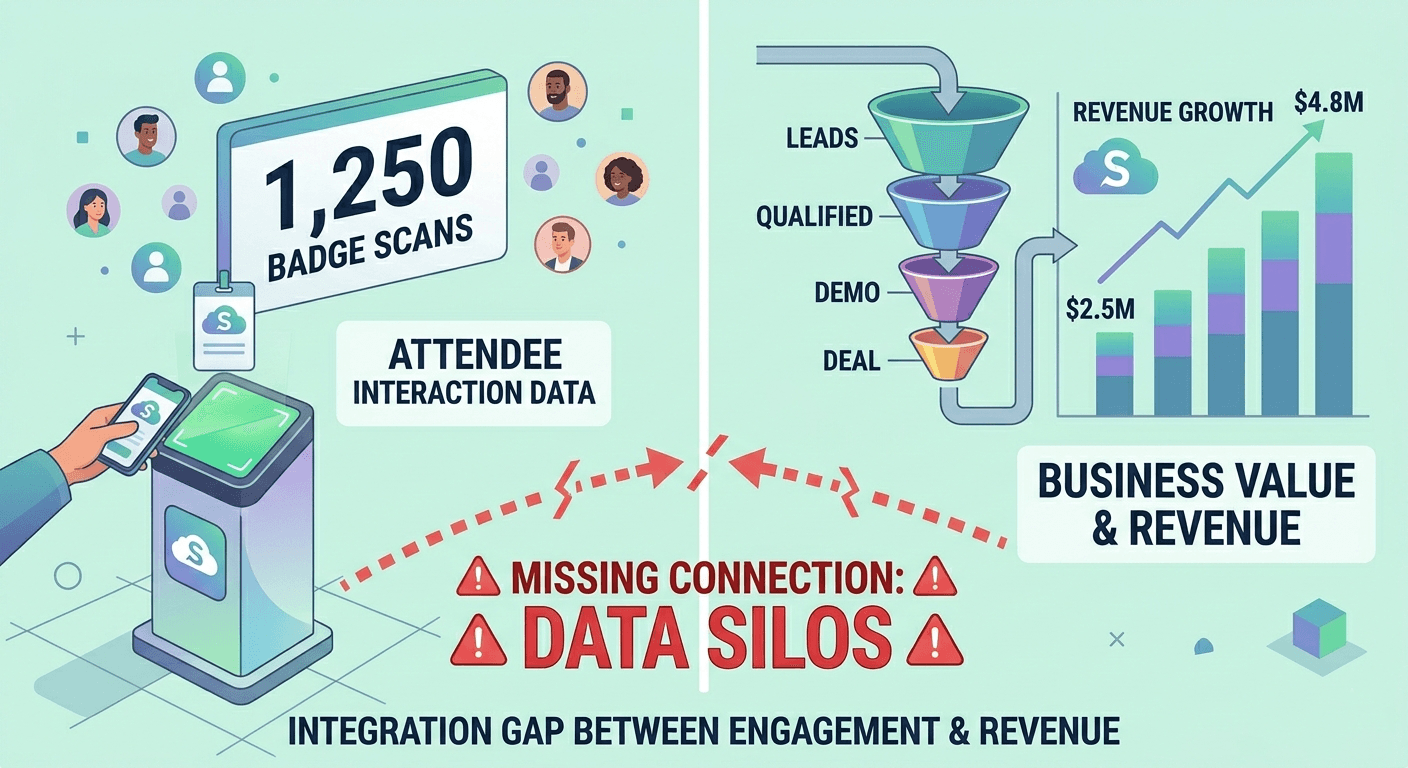
A badge scan tells you that someone walked past your stall and let you read their QR code. It does not tell you whether they have a problem you can solve, whether they are the right buyer, or whether anyone on your team plans to follow up.
The disconnect shows up in the numbers. Industry benchmarks suggest roughly one marketing qualified lead for every seven booth engagements, but that ratio assumes qualification is happening at capture. When capture is badge-only, with no interest field, no product line, no priority, the entire qualification step gets pushed downstream, usually to an SDR who was not there and has no context.
By that point, the contact is one row in a CSV that arrived five days after the show. The SDR makes a cold call to someone who barely remembers the booth. The meeting rate is low, and the CFO asks whether the event spend was justified.
The problem is not the event. It is the capture workflow.
The 5 Metrics That Actually Matter
1. Cost Per Lead (CPL) at the Event Level
Divide total event spend (booth fees, travel, collateral, staff time) by total contacts captured. This gives you a baseline, but CPL alone is misleading if lead quality is low.
A more useful variant: cost per marketing qualified lead (cost per MQL). If your CPL is 4$ but only one in ten contacts meets your MQL definition, your effective cost per MQL is 40$. That number is worth comparing to your other acquisition channels.
2. MQL Rate from Event Leads
Out of all contacts captured, what percentage meets your minimum qualification bar? This is the ratio that separates events with strong engagement from events that generate a lot of noise.
MQL rate (Marketing Qualified Lead) improves directly with capture quality. Teams that fill a six-field schema at capture (interest level, product line, priority, company size, budget stage, next action) convert badge contacts to MQLs at a meaningfully higher rate than teams that capture name and email only.
3. Lead-to-Opportunity Rate
Of all contacts that entered the Habsy Platform from the event, how many became active sales opportunities within 30 days? This metric surfaces whether the event attracted the right audience and whether your follow-up motion was fast enough.
A low lead-to-opportunity rate often points to one of two things: the wrong audience was captured, or follow-up was too slow. Both are fixable, but only if you are measuring.
4. Time-to-First-Touch
This is the gap between when a contact was captured and when a sales rep made the first outreach attempt. It is also the metric most directly within your control.
Contacts captured on Day 0 of a trade show that receive outreach the same evening or the following morning convert at a dramatically higher rate than contacts that wait until Day 5 or Day 10. The person still remembers the conversation. The momentum from the show is still active. The context in the rep's notes is still fresh.
5. Pipeline Influenced by Event
This is the CFO metric: total pipeline value (and eventually closed revenue) that can be attributed to contacts captured at the event. It requires Source/Campaign fields to be set correctly at capture and preserved through the Habsy Platform.
Without clean attribution data, you cannot answer 'What did AutoExpo generate for us this quarter?' and the event budget becomes difficult to defend.
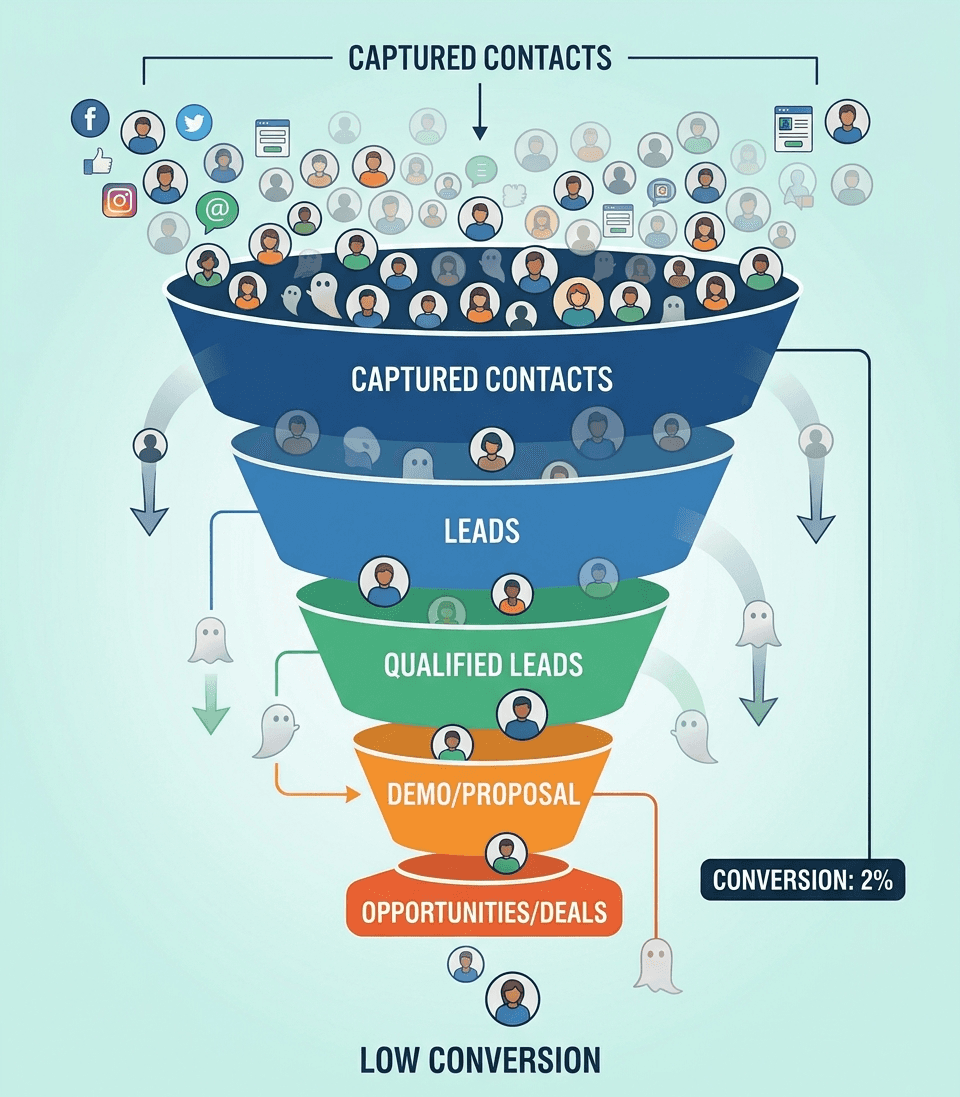
The research on follow-up decay is consistent. Within a few hours of a meaningful interaction, recall is high, the problem feels salient, and the prospect is likely still in an evaluative mindset. By 24 hours, competing priorities have arrived. By 72 hours, the conversation at your stall is one of dozens of vague memories from the show.
The exhibitors who consistently get strong event ROI are not the ones with the most impressive booth or the largest card stack. They are the ones whose SDRs are making calls on Day 0 and Day 1, with actual context about what the prospect said they needed.
That context requires a voice note recorded at capture, or at minimum, a filled Intent Signal. It cannot be reconstructed from a badge CSV delivered a week after the show.
Attribution fails when the Source/Campaign field is added manually during Follow-up, after someone tries to remember which event a batch of contacts came from. The field gets left blank, or filled inconsistently, or the whole import is delayed long enough that no one is sure anymore.
The fix is straightforward: set Source = Event Name at capture, as a default in the event preset, so it is on every contact without requiring anyone to remember. Owner should be assigned at capture or during the export review. Campaign can be set at the batch level.
With those three fields populated correctly, the attribution chain works. You can filter Leads by Source = AutoExpo2025 and show you every contact, every activity, and eventually every opportunity that traces back to that show.
The Enrichment Gap
One reason event attribution is weak in most Follow-up is that contacts arrive with only the data the badge scanner captured: name, company, title, and sometimes an email. There is no indication of what was discussed, what product they were interested in, or what their buying timeline looks like.
Enrichment at capture closes this gap. A custom Interest field set to 'Demo' or 'Pricing' at the stall is worth more than a web-scraping enrichment added days later, because it captures intent at the moment of peak relevance. That field then carries through the export, into the Platform, and into the sequence.
Not all capture workflows produce the same ROI. The table below shows how the key dimensions differ across approaches.
Metric | Manual Capture | Badge-Only | Full Lead Capture Platform (e.g., Habsy) |
Contact quality at capture | Low (incomplete) | Medium (name/company) | High (Intent Signals + notes) |
Follow-up context | None | None | Voice note + reminder set at scan |
Time-to-follow-up | 3-7 days | 5-10 days (CSV delay) | Same day / within 24 hours |
Duplicate handling | Manual cleanup | Not addressed | Auto detection |
Pipeline attribution | Unclear | Partial | Source/Campaign in every export |
Offline capture | Yes (paper) | No | Yes (syncs when online) |
Cost per MQL | High (time + rework) | High (low conversion) | Lower (context drives conversion) |
Define a six-field capture schema before the show. Interest level, product line, priority, stall number, source, and owner. Keep required fields to three or fewer during rush hours.
Set Source = EventName as the default in your event preset so every contact is attributed correctly without manual input.
Use voice notes at capture to preserve context that cannot fit in a dropdown. A ten-second note recorded at the stall is worth more than a call script written later.
Set follow-up reminders at capture, not the next morning. Tomorrow 10:00 is a concrete commitment. 'Will follow up later' is not.
Remove Duplicates before Follow-up. Duplicate leads waste SDR time and distort attribution metrics.
Export a mapped CSV within 24 hours. If the list is not ready to follow-up by Day 1, the window for high-conversion follow-up is already narrowing.
Measure time-to-first-touch for every event and compare it across shows. This single metric correlates more strongly with event ROI than badge count or total contacts captured.
Most teams do the hard part right. They show up, have meaningful conversations, and collect dozens or hundreds of contacts. Where things break is what happens next. Notes are missing. Follow-ups are delayed. Context is lost. By the time someone reaches out, the moment has passed.
Habsy is built to fix that exact gap.
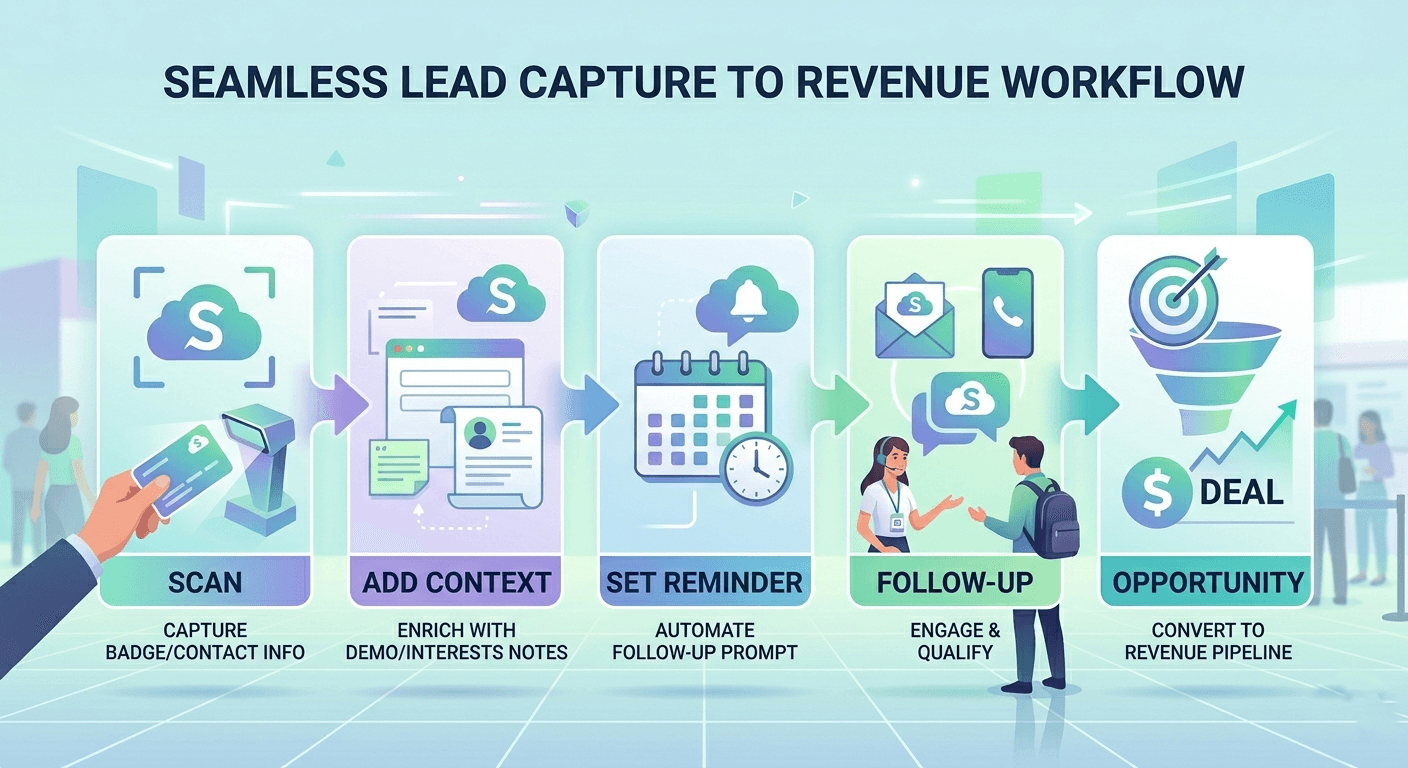
It is a lead capture and contact management platform designed for exhibitors and booth teams who need speed at the stall and discipline after the event. You can scan QR badges and business cards in seconds, capture every interaction in one place, and add the context that makes follow-ups work. Custom qualifiers keep your data structured. Voice notes preserve what was actually said. Reminders ensure nothing slips through.
By the time your team sits down the next morning, every contact is already organized, prioritized, and ready for action.
Export a clean, mapped CSV to any CRM or spreadsheet within 24 hours. No rework. No messy data. No lost opportunities.
If your goal is to turn conversations into pipeline and pipeline into deals, this is the system that makes it happen.
FAQs:
1. How do you measure ROI from events and trade shows?
Event ROI is measured by tracking how many leads turn into qualified opportunities and revenue. Instead of focusing only on badge scans, businesses should look at metrics like conversion rates, follow-up timing, and pipeline generated from event leads to understand true performance.
2. What is the best way to track leads from events?
The best way to track event leads is to capture them in a structured system with fields like source, interest, and priority at the time of interaction. This ensures every lead is organized, easy to follow up, and can be traced back to the event for accurate performance analysis.
3. Why is follow-up important after networking events?
Follow-up is critical because it determines whether a conversation turns into an opportunity. Reaching out within 24 hours keeps the interaction fresh and increases response rates, while delayed follow-ups reduce engagement and lower the chances of conversion.
4. What data should you collect at events for better conversions?
At events, you should collect key data such as contact details, interest level, priority, and source. Adding context about the conversation, such as specific needs or timelines, improves follow-up quality and helps prioritize high-value leads.
5. How can businesses improve conversions from event leads?
Businesses can improve conversions by capturing leads with context, following up within 24 hours, removing duplicates, and maintaining a structured contact list. Consistent follow-up and clean data significantly increase the chances of turning leads into opportunities and deals.