Blog
TL;DR
Follow-up is won or lost in the last 60 seconds of the booth conversation, not in the CRM.
Ask one Reciprocal-commitment question before the visitor walks away.
Use the Promise Ledger method: Capture every verbal promise as a tagged note on the spot.
Set a one-tap reminder (Tomorrow 10:00 AM) before moving to the next visitor.
Export a mapped CSV within 24 hours so SDRs can blitz Day-0.
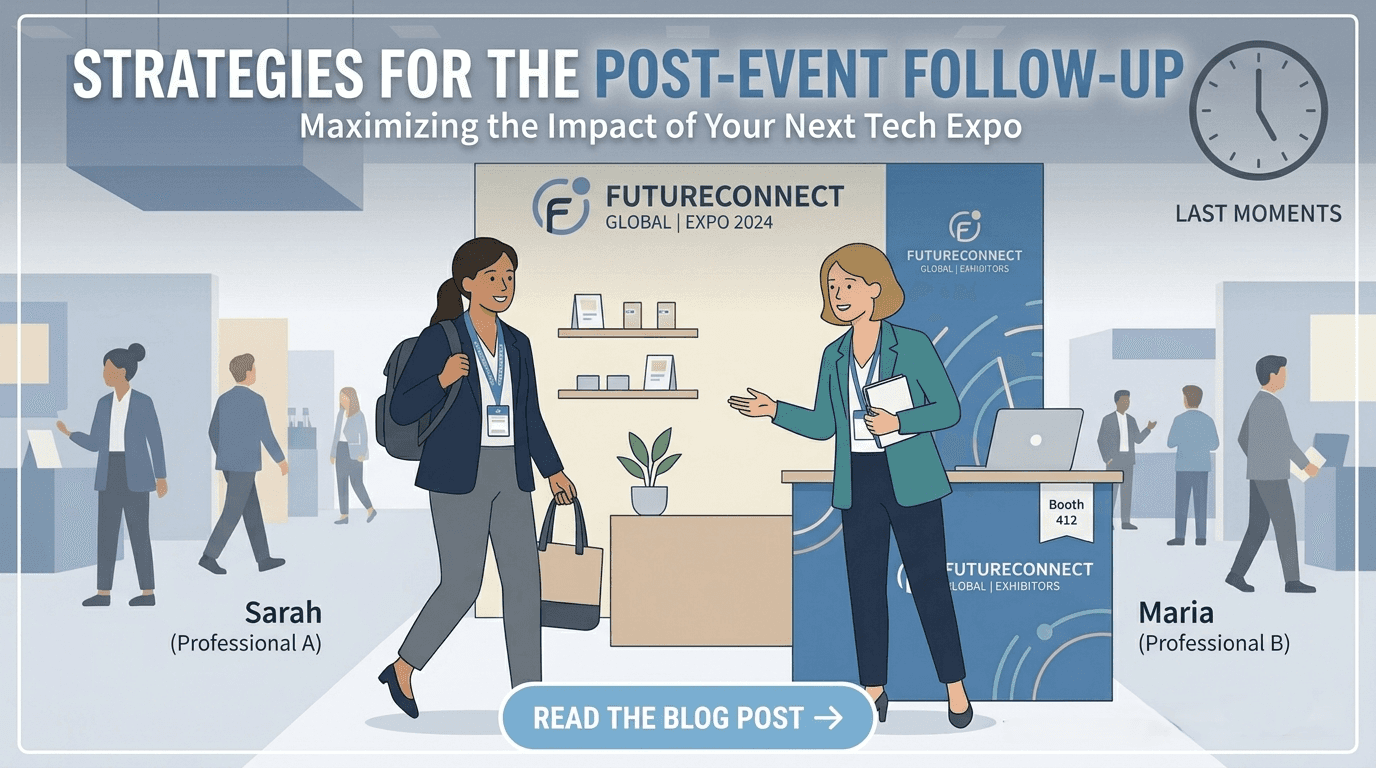
Learn the commit-before-they-walk framework to turn every booth conversation into a scheduled follow-up. Scripts, qualification tips, and a Day-1 workflow.
Most exhibiting teams treat follow-up as a speed problem. Get the list clean faster. Import to CRM within 24 hours. Send the email before competitors do.
All of that matters. But there is a more fundamental problem that happens before any of those steps: the follow-up was never actually agreed to during the conversation.
A visitor stops at your booth, shows genuine interest, shares their card or lets you scan their badge, and leaves with a warm smile. Your rep thinks: solid lead. But no specific next step was named, no time was agreed, no reciprocal commitment was made. "Great chat" is not a pipeline entry. It is a polite exit.
Research on why trade show leads go cold consistently points to the same root cause: the rep made a promise ("I will send you the case study") but the visitor made none. Commitment asymmetry. The follow-up depends entirely on one party remembering to act, with no obligation or expectation from the other side.
This blog is about fixing that at the source, in the final 60 seconds of the conversation itself.
The last 60 seconds: where booth conversation follow-up is won or lost
Every booth conversation has a closing window. It begins when the visitor starts showing signals that they are ready to move on: glancing around, shifting weight, saying "this is really interesting." Most reps let that window close with a card exchange and a vague promise. The high-conversion approach is different.
The reciprocal commitment rule
A follow-up that both parties have agreed to is far more likely to happen than one that only the rep planned. The difference is a single question asked before the visitor leaves.
Here is the structure: "If I send you [specific thing] by [specific day], could we find 15 minutes on [specific day or range]?"
The question does three things at once. It makes your commitment concrete (not "I will be in touch"). It asks for something specific in return (not "let me know if you are interested"). And it creates a social contract that the visitor has actively accepted.
Four closing scripts by visitor type
HOT LEAD (HIGH INTENT, TIME CONFIRMED) "You mentioned Q3 is the decision window. If I send the comparison doc by Thursday, can we do a 20-minute call Friday or Monday?" |
WARM LEAD (INTERESTED, TIMELINE UNCLEAR) "It sounds like this fits what your team is working on. If I put together a short summary of how teams like yours use this, would it be worth a 15-minute call next week to see if there is a fit?" |
BROWSER (CURIOUS, NO STATED NEED) "Happy to send you the overview. Is email the best place, or would LinkedIn work better? I will drop it across by tomorrow." (Note: a low-commitment ask still gets a specific channel and a timeline. The visitor is now expecting something.) |
SENIOR EXECUTIVE (TIME-SCARCE, DECISION-MAKER) "I know your time is limited here. If I brief your team lead by end of week, would that be the right next step? Or is there a better way in?" |
The goal across all four is the same: get a reciprocal yes before the conversation ends. A yes to receiving something specific, on a specific timeline, is a soft commitment to the follow-up.
Qualification that happens in a spreadsheet two days after a show is not qualification. It is guesswork dressed up in columns.
The best booth teams qualify in the conversation itself, using three questions that replace fifteen CRM fields.
The Three qualifying questions
Question 1: "What is the specific problem you are trying to solve?" This is the single most important qualifying question at any booth. A vague answer ("we are exploring options") tells you as much as a badge scan. A specific answer ("we lose about 30 leads per show to follow-up lag") tells you the person has a defined pain, a vocabulary for it, and probably a budget attached to it.
Question 2: "What does your timeline look like?" This separates active evaluators from passive researchers. "We need something before the IICC show in March" is a buying signal. "No rush, just looking" is not disqualification, but it changes how you prioritize the follow-up.
Question 3: "Who else is involved in this decision?" A visitor who names a colleague or manager is signaling that there is a buying process. This tells you whether to route the lead to an SDR for a discovery call or to a senior rep for a direct outreach.
Reading polite interest versus real intent
The hardest skill in booth qualification is telling the difference between a visitor who is genuinely engaged and one who is too polite to disengage. A few signals that distinguish them:
Real intent: They ask about pricing, integration with a specific tool, or timelines without being prompted.
Polite interest: They nod enthusiastically and ask no follow-up questions.
Real intent: They bring up a specific pain or use case from their own context.
Polite interest: They say "this could be useful for us" without explaining how.
Polite-interest leads are not wasted. But they belong in a lower-priority bucket, not in the Day-0 blitz list. Setting that distinction at the booth saves your SDR team hours of wasted dials.
There is a gap between what your rep heard in the conversation and what the CRM eventually receives. That gap is context decay. Within four hours of a booth interaction, most reps have forgotten specific details. Within 24 hours, they remember the category of the conversation but not the specifics. Within 48 hours, the lead looks like every other lead.
The Promise Ledger method closes that gap.
The Promise Ledger method
At the moment a commitment is made in the conversation, record it immediately as a structured note. Not a paragraph. A one-sentence log of exactly what was agreed.
Format: [Rep promised] + [Visitor agreed to] + [Timeline]
Example: "Will send pricing comparison doc by Thursday / They agreed to 20-min call Friday or Monday / Interest: Pro plan, Q3 decision."
This is not a CRM task. It is a raw record of the conversation's commitment, captured while both parties still remember what was said. In practice, a 10-second voice note works even better than typing during a busy show floor. Speak the commitment out loud immediately after the visitor leaves: "Interested in Pro, wants pricing comparison, agreed to call Friday, budget confirmed, timeline Q3." That note becomes the talk track for the follow-up call.
The Promise Ledger solves a specific and underappreciated problem: reps follow up on the wrong thing. They send the brochure instead of the specific case study that was mentioned. They email instead of calling, because they forgot the visitor said "email is hit-or-miss, better to call." A 10-second voice note prevents all of that.
A natural workflow for this: scan the badge or card, fill in two or three custom qualification fields (Interest level, Product Line, Priority), then drop the voice note while the details are still live. Set a one-tap reminder before moving to the next visitor. The entire flow takes under 20 seconds with a good setup.
Not every booth conversation ends with a reciprocal yes. Some visitors are genuinely not ready. Some are politely declining without saying so. Some need more information before they can agree to anything. Here is how to handle each situation without burning the lead.
The low-stakes ask
When a visitor hesitates on a call commitment, drop the ask to the smallest possible unit of action. Instead of "can we schedule a call," try: "Can I send you one page that covers the specific use case you mentioned? No call needed, just to have it."
A yes to a low-stakes ask is still a yes. It creates an obligation to read the material, which opens a second follow-up moment ("did you get a chance to look at that?"). It also keeps the door open for a call ask after they have seen the content.
When to disqualify in the moment
Not every visitor who comes to your booth is a lead. Someone who cannot answer Question 1 (specific problem), gives a timeline of "maybe next year at the earliest," and is not involved in any decisions is a contact worth capturing but not worth a priority follow-up slot.
The honest booth conversation ends like this: "Happy to send you our overview so you have it when things move forward. What is the best email for that?" You capture the contact, set a low-priority tag, and move on. This is not a lost lead. It is a correctly categorized one.
Disqualifying in the moment protects your team's Day-0 blitz list. A Hot list that contains warm-to-cold contacts is not a Hot list.
Once the commitment is made and captured, the system takes over. The single most important step between the booth and the CRM is closing the same-day loop before context decays completely.
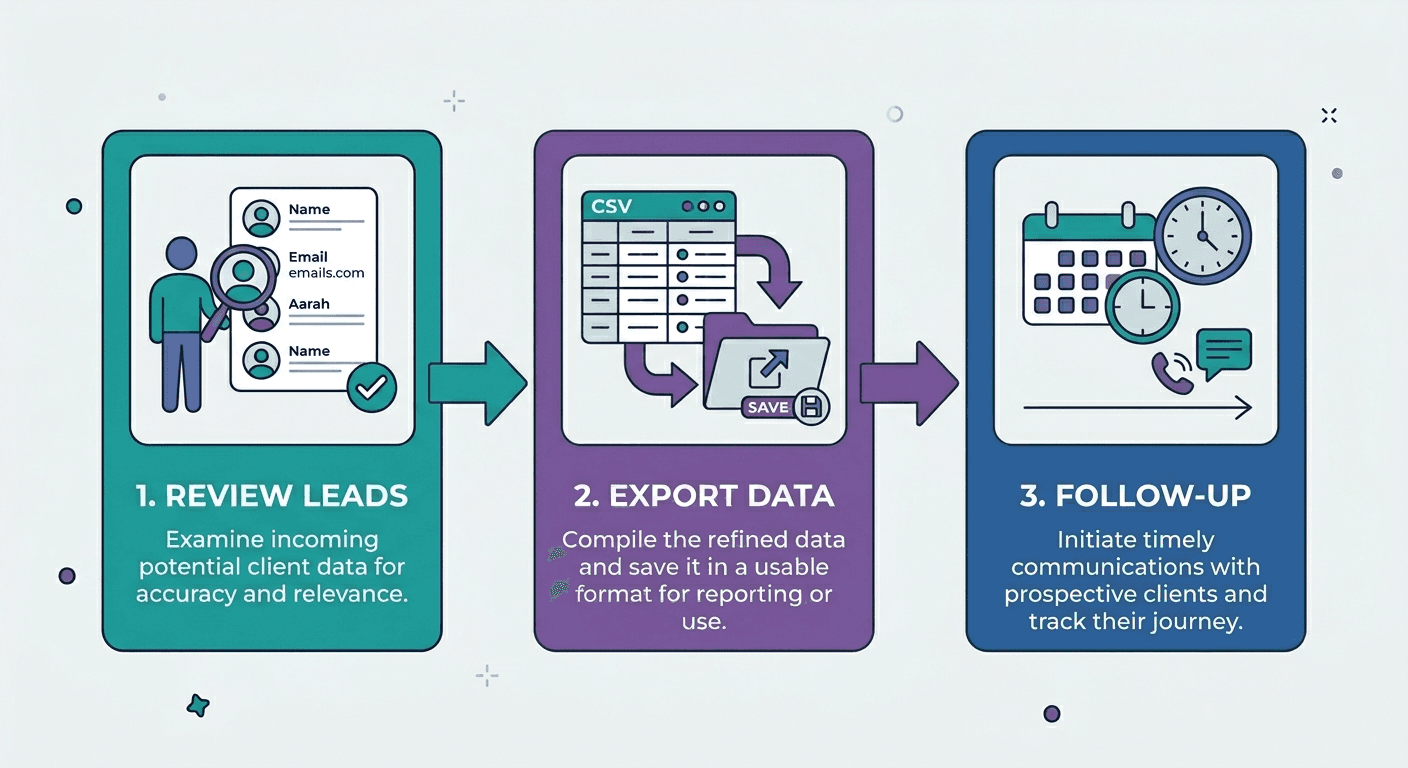
End of each show day, run three steps:
Step 1 - Review and fill gaps: Open the review queue and check that every contact captured during the day has a qualification field set and a voice note or written note attached. Missing email or phone on a hot lead is a gap worth filling now, not tomorrow.
Step 2 - Run de-duplication: The same person may have visited twice, or been captured by two different reps on different shifts. Merge before export. De-duplicating after CRM import creates confusion and attribution problems that take weeks to clean up.
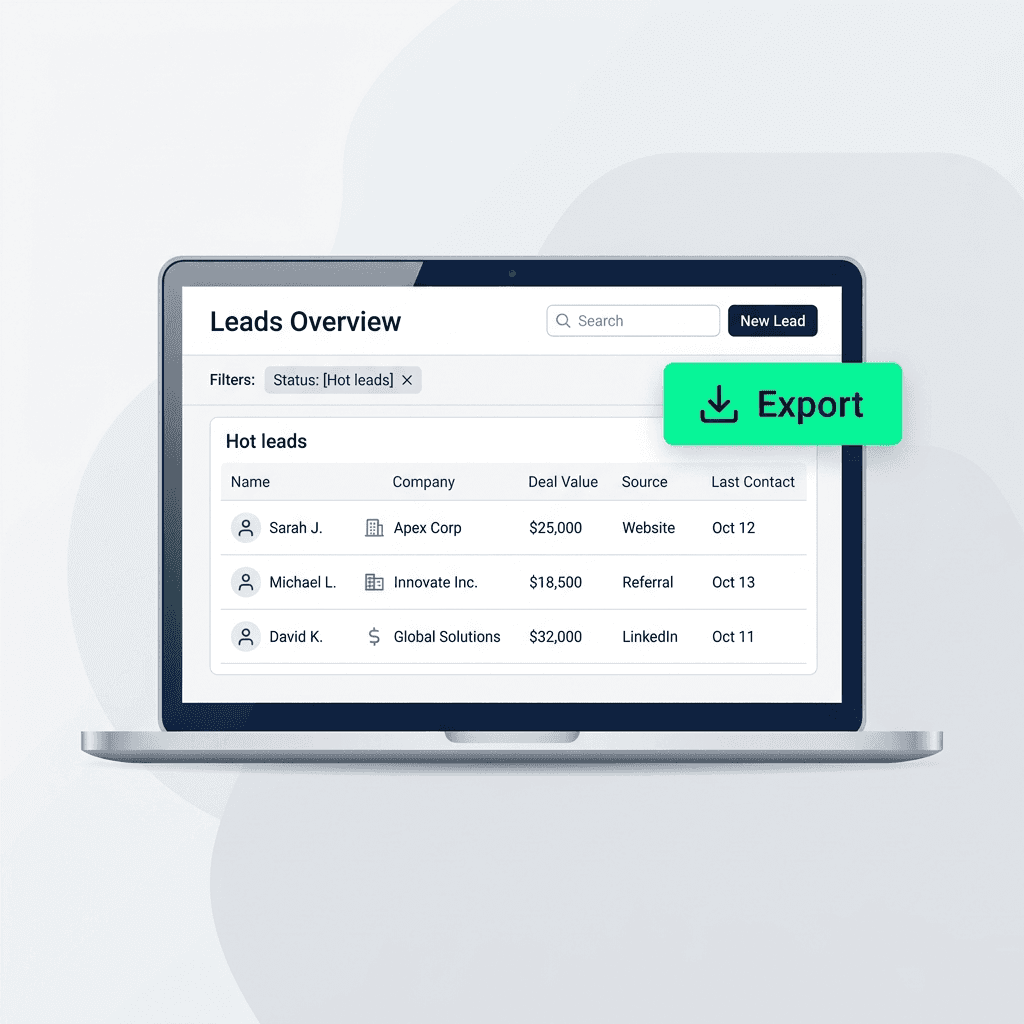
Step 3 - Export the Hot slice first: Do not wait until every contact is perfect before starting outreach. Export the filtered list of Hot and P1 leads, import to CRM, and let your SDRs begin Day-0 outreach while the full list is still being cleaned. A mapped CSV export with Owner, Source, and Campaign fields already filled means your SDRs can start sequences without any manual prep.
The reminder set at the booth surfaces automatically in the My Reminders queue the next morning. The voice note attached to that contact gives the SDR the exact talk track. The commitment recorded in the Promise Ledger tells them what to reference in the first sentence of the call.
This is what Day-1 readiness actually looks like: not a frantic cleanup, but a workflow you ran at the booth.
Be Day-1 ready for your next event Habsy captures, qualifies, and exports event leads so your team is sequence-ready by tomorrow. Your contacts stay under your control. Export or delete any time. habsy.ai |
1. Why do most trade show leads never turn into sales?
Most leads fail because there is no clear next step agreed during the conversation. Without a mutual commitment, follow-ups rely on memory and often get ignored.
2. How do I make sure prospects respond after a booth conversation?
Get a verbal commitment before they leave. When a visitor agrees to a specific follow-up like a call or resource, they are far more likely to respond later.
3. What is the biggest mistake reps make at trade show booths?
The biggest mistake is ending conversations with vague phrases like “I’ll follow up” instead of securing a specific time, action, or outcome.
4. How can I tell if a booth visitor is a real lead or just browsing?
Real leads ask specific questions about pricing, timelines, or use cases. Browsers stay general and avoid committing to next steps.
5. What should I do immediately after a booth conversation ends?
Capture the exact commitment, key details, and next step right away using notes or voice input, and set a reminder so the follow-up happens on time.