Blog
Smart business cards use NFC and QR code technology to share your professional profile with a single tap or scan. For entrepreneurs, they replace paper cards that go out of date, get lost after pitch events, or sit in a drawer until the lead goes cold. A smart business card lets founders update contact details in real time, link to pitch decks and portfolios, capture investor and client contacts at the point of exchange, and send a personalized follow-up the same day. This guide covers how smart cards work, what features matter most for entrepreneurs, and how founders are using them at pitch events, trade shows, and networking meetups in 2026.
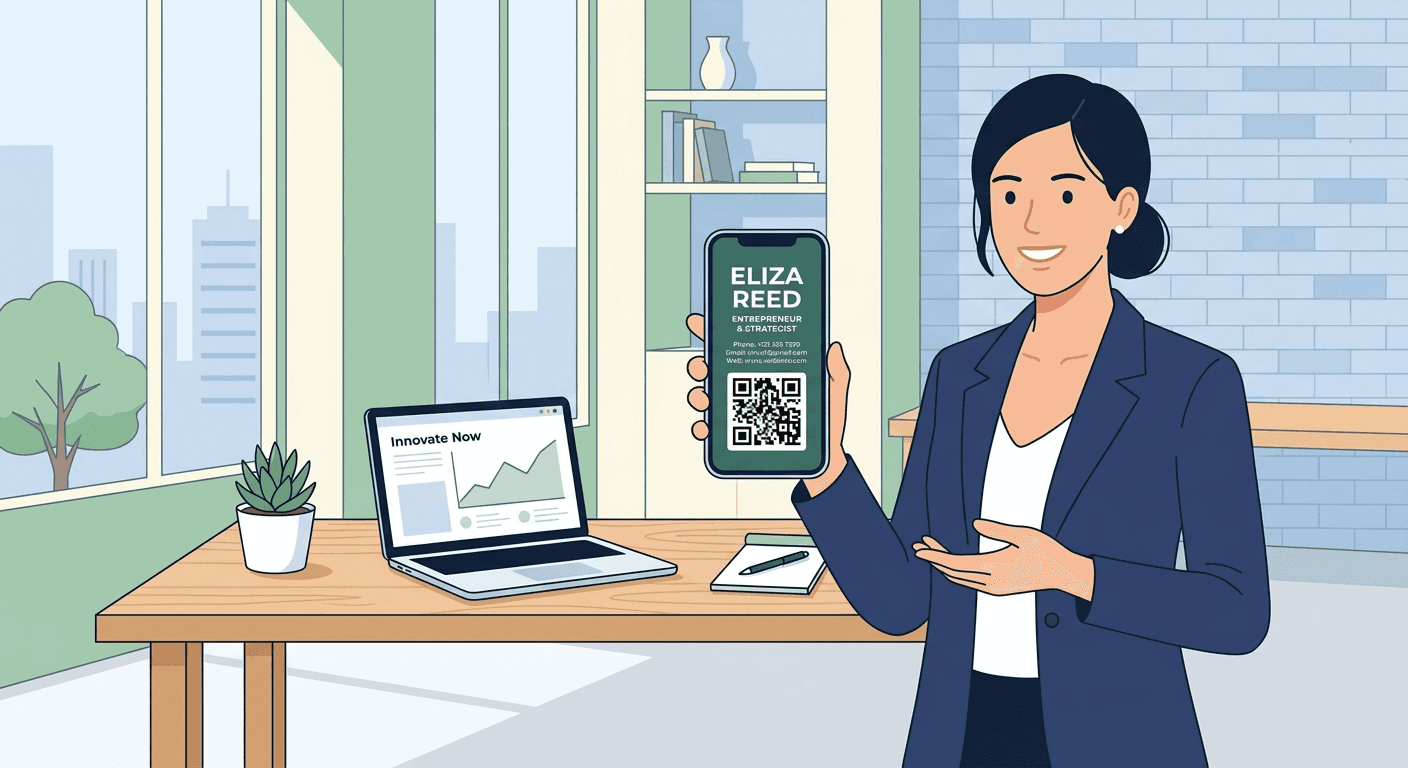
Smart business cards for entrepreneurs in 2026. Learn how NFC and digital business cards help founders share contact details instantly, capture investor and client leads, and follow up faster at pitch events, trade shows, and networking meetups.
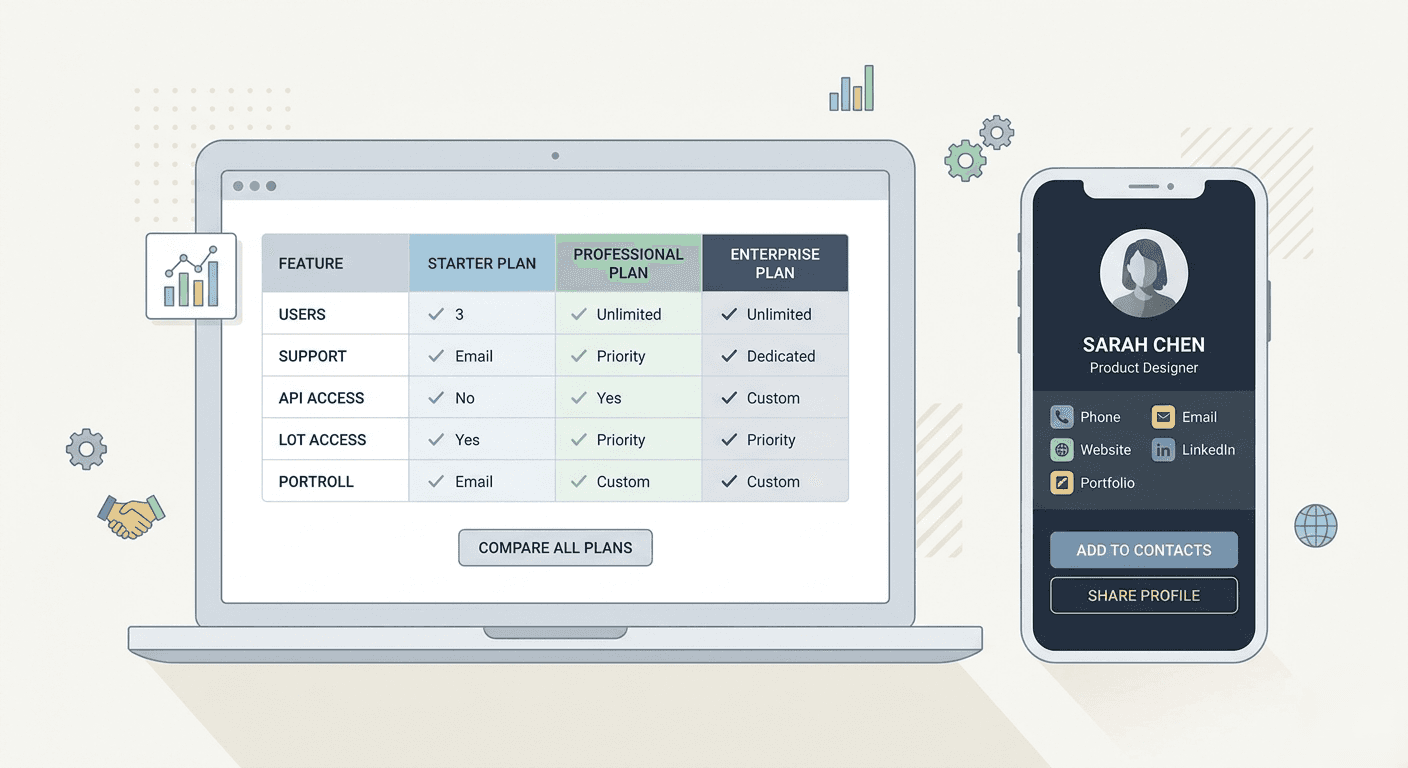
Smart business cards use NFC and QR code technology to share your professional profile with a single tap or scan. For entrepreneurs, they replace paper cards that go out of date, get lost after pitch events, or sit in a drawer until the lead goes cold. Platforms like Habsy take this further by combining smart digital business cards with contact capture, voice notes, reminders, intent signals, and CRM-ready exports in one workflow. Founders can update contact details in real time, link pitch decks and portfolios, capture investor and client contacts instantly, and send personalized follow-ups the same day. This guide covers how smart business cards work, what features matter most for entrepreneurs, and how founders are using tools like Habsy at pitch events, trade shows, and networking meetups in 2026.
Why Entrepreneurs Are Switching to Smart Business Cards
A smart business card is a physical or digital card embedded with technology that shares your professional information instantly when tapped or scanned. The two most common technologies are NFC and QR codes, and most modern smart cards support both.
NFC: Tap to Share
NFC is a short-range wireless technology that lets two devices communicate when they are a few centimeters apart. An NFC business card contains a tiny chip that, when tapped against a smartphone, opens your digital profile in the recipient's browser. No app download is required. The entire exchange takes two to three seconds. NFC works on virtually all modern Android phones and iPhones (iPhone 7 and newer).
QR Code: Scan to Save
A QR code printed on a physical card or displayed on a phone screen encodes a link to your digital profile. When the recipient scans it with their camera, your contact details appear and can be saved as a vCard with one tap. QR codes are a reliable fallback for situations where a tap is awkward or the recipient's phone does not support NFC.
The Digital Profile Behind the Tap
What makes a smart business card truly smart is not the chip or the code. It is the digital profile they link to. Unlike a paper card that is static and limited to a few lines of text, a smart card connects to a living profile that can include your photo, bio, contact details, social links, portfolio, pitch deck, calendar booking page, and video introduction. You update it once and the change is reflected everywhere, for every person who has ever received your card.
Why Entrepreneurs Are Switching to Smart Business Cards
Entrepreneurs network differently than people in established corporate roles. They attend pitch events, demo days, trade shows, accelerator meetups, co-working socials, and investor dinners. The volume and variety of contacts is high, and the stakes of losing a single connection can be significant.
You Never Run Out of Cards
Paper cards run out at the worst possible moment. With Habsy, your digital business card is always ready to share through NFC tap, QR code, direct link sharing, and multi-sharing options that let you instantly share your profile with multiple people at once. Whether you meet someone at a conference, trade show, investor pitch, or casual coffee chat, your professional profile is always one tap away.
Unlike traditional business cards, Habsy also turns every exchange into an organized contact workflow. You can capture the other person’s details, add notes or voice notes, set reminders, and follow up while the conversation is still fresh.
Your Information Stays Current
Entrepreneurs change titles, pivot companies, update websites, and rebrand more frequently than most professionals. With paper, every change means reprinting. With a smart card, you update your digital profile once and every future Category or scan reflects the new information. This is especially valuable in the early stages when your startup is evolving quickly.
You Can Link to Your Work, Not Just Your Name
A paper card tells someone who you are. A smart card shows them what you do. Embed links to your pitch deck, product demo, case studies, press coverage, or a short video introduction. For an entrepreneur trying to make an impression on a potential investor or client, this is the difference between a forgettable card and a memorable one.
You Get Data on Who Is Interested
Analytics built into smart business card platforms show you who viewed your profile, what links they clicked, and when they engaged. This data helps you prioritize follow-up. If an investor viewed your pitch deck link twice in 24 hours, that is a signal to reach out immediately. Paper cards give you zero visibility into what happens after the handshake.
You Capture Contacts, Not Just Share Them
Sharing your own card is only half of professional networking. The other half is capturing the details of the people you meet. Entrepreneurs collect business cards from investors, advisors, potential customers, press contacts, and co-founders. The platforms that help founders most are the ones that handle both sides: outbound sharing and inbound capture. A business card scanner that can batch-process collected cards with AI enrichment turns a pocket full of paper into a structured, searchable contact list in minutes.
Not every smart card platform is built for founders. Some prioritize team management for large enterprises. Others focus on NFC hardware design. Here are the features that matter most for entrepreneurs and small business owners.
NFC and QR Sharing Without Requiring an App
If the person receiving your card needs to download an app first, you lose the moment. Habsy makes sharing frictionless through NFC tap and QR code sharing that works directly from the recipient’s phone browser, with no app installation required. Users can instantly share both their Professional Profile and Business Profile, allowing contacts to view personal details, company information, social links, portfolios, products, or services in one place.
Whether you are networking at a conference, pitching investors, or meeting clients casually, Habsy helps you exchange details instantly without paper cards, extra apps, or broken follow-ups. Contacts can save your details immediately and even share their own information back through Habsy’s two-way sharing flow.
Customizable Digital Profile
Your smart card should reflect your personal branding. Look for platforms that let you customize colors, logos, photos, headlines, and the layout of your profile. For entrepreneurs running multiple ventures, the ability to create separate card profiles for each business is especially useful.
Portfolio and Pitch Deck Links
Founders need more than contact information on their cards. A link to your pitch deck, product demo, or portfolio turns a simple introduction into a sales conversation. Look for platforms that support embedded media, file attachments, and clickable links to external content.
Lead Capture and Contact Scanning
At a pitch event or trade show, you collect as many cards as you hand out. A smart card platform with a built-in business card scanner lets you digitize collected cards in seconds, attach notes about the conversation, and organize contacts for follow-up. This eliminates the post-event data entry that founders dread.
CRM Integration
Every contact should flow into your CRM or pipeline tool without manual typing. Through the Habsy Platform, teams can integrate with the CRM or workflow tool of their choice, including HubSpot, Salesforce, Zoho, Notion, Airtable, and more. This helps businesses move contacts from capture to follow-up without messy spreadsheets or manual data entry.
Same-Day Follow-Up Tools
The best smart card platforms help you follow up the same day. AI-powered customizable templates for email and WhatsApp make it possible to send a personalized message to every new contact while the conversation is still fresh, even after a busy demo day with 30 new leads.
Offline Capability
Startup events, co-working spaces, and conference venues are notorious for unreliable WiFi. A smart card that works offline, capturing contacts and saving them for sync later, ensures you never lose a lead because of poor connectivity.
The technology is only useful if it fits into the way founders actually work. Here are five scenarios where smart business cards turn casual introductions into real business outcomes.
Investor Pitch Events and Demo Days
After a pitch, founders have a narrow window to connect with interested investors. A smart business card shared via NFC tap or QR code instantly delivers your contact details, pitch deck link, and calendar booking page. The investor saves your details to their phone in seconds. Meanwhile, you scan their card and record a quick voice note: "Series A interest, wants product demo, follows up on Tuesdays." When you send a follow-up email that evening referencing the specific conversation, the investor sees a founder who is organized and fast, exactly the traits they want in a portfolio company.
Trade Shows and Industry Conferences
Entrepreneurs exhibiting at industry events collect dozens or hundreds of contacts in a single day. Smart business cards handle both the outbound sharing (your card to visitors) and the inbound capture (visitor cards to you). Batch scanning processes a full day's cards in minutes. Voice notes recorded after each conversation preserve context that would otherwise be lost by day three. Multilingual OCR supporting 200+ languages ensures accurate capture even when cards arrive in Arabic, Mandarin, or Japanese at international trade shows. This is where a digital business card combined with a lead capture workflow turns a chaotic event into a structured pipeline.
Client Meetings and Sales Calls
For founders who are also the primary salesperson (which is most founders), a smart card that links to a calendar booking page, product demo, and case studies turns every meeting into a potential next step. The client leaves with your full profile on their phone, not a paper card that sits in a stack. You leave with their details captured, enriched with company background, and Categorized for follow-up.
Co-Working Spaces and Casual Networking
Not every introduction happens at a formal event. Entrepreneurs meet potential collaborators, advisors, and customers at co-working spaces, coffee shops, and social gatherings. A smart card on your phone or an NFC card in your wallet means you are always ready to exchange details, even when you did not plan to network that day. The spontaneous conversation that leads to a partnership starts with being able to share your information instantly.
Accelerator and Incubator Programs
Cohort-based programs involve constant introductions to mentors, fellow founders, and visiting investors. A smart business card shared at the start of the program and updated as your startup evolves keeps every connection current without reprinting. When demo day arrives, every mentor and investor already has your latest details, and you have a complete record of every person you met throughout the program.
Paper Card | Smart Business Card | |
Update when you pivot or rebrand | Reprint entire batch | Update once, reflected everywhere |
Share at a pitch event | Hand over and hope they keep it | NFC tap or QR scan in 2 seconds, saved to their phone |
Include pitch deck or portfolio | Not possible | Clickable links open directly from the card |
Know if an investor looked at your card | No visibility | Analytics show views, clicks, and saves |
Capture contacts you receive | Stack of cards to type up later | Scan, Category, and enrich in seconds |
Follow up after a conference | Manual data entry days later | Personalized email or WhatsApp the same day |
Work in venues with poor WiFi | Paper works anywhere | Offline capture syncs when connectivity returns |
Environmental impact | 88% discarded within a week (industry data) | Zero paper waste, reusable indefinitely |
For most entrepreneurs, the practical choice in 2026 is a smart business card as the primary tool, with a small batch of premium paper cards for specific contexts where a physical exchange is expected. The hybrid approach (adding a QR code to the back of a paper card) works for founders who want to bridge both worlds.
Most smart business card advice focuses on sharing your card. For entrepreneurs, the bigger problem is often what happens with the contacts you receive. This is where most founders lose value.
The Post-Event Bottleneck
You return from a conference with 30 business cards, a handful of LinkedIn connection requests, and a few names scribbled on napkins. The traditional approach is to sit down over the weekend and type everything into a spreadsheet or CRM. By the time you get to it, half the context is gone. You remember the investor but not what they were interested in. You have the journalist's card but cannot recall which product angle you discussed.
A Better Workflow: Capture at the Moment of Exchange
The founders who get the most from events are the ones who capture each contact at the moment of exchange, not days later. Scan the card. Record a 10-second voice note: "Met at Startup Grind, interested in Series A, wants a product demo next week." Categorize the contact as high priority. By the time you are back at your hotel, your contacts are enriched with company details, ranked by priority, and ready for a personalized follow-up.
Follow Up the Same Day, Not Next Week
Industry data consistently shows that leads contacted within 24 hours are significantly more likely to respond than those reached a week later. Yet the majority of event contacts never get a follow-up at all. AI-powered customizable templates for email and WhatsApp make it possible to send 30 personalized messages in minutes rather than hours. For entrepreneurs, this speed is a competitive advantage. The founder who follows up that evening is the one the investor remembers on Monday morning.
Clean Data into Your CRM Without the Cleanup
For entrepreneurs using CRM tools to manage their pipeline, the last thing you need is to import messy spreadsheets filled with duplicates and incomplete details. Through the Habsy Platform, teams can integrate with the CRM of their choice, including HubSpot, Salesforce, Zoho, and other workflow tools. Contacts are organized with notes, voice notes, categories, reminders, and enrichment data before export, helping businesses maintain a cleaner and more structured pipeline as they scale.
Smart Business Card Design Tips for Entrepreneurs
A smart card is only as effective as the digital profile behind it. Here are the elements that make an entrepreneur's card stand out.
Lead With Your Value Proposition, Not Your Title
"Founder" tells someone nothing about what your company does. "I help B2B SaaS companies cut onboarding time by 60%" tells them everything. Use your headline or bio to communicate value, not hierarchy. Personal branding matters more for entrepreneurs than for anyone else because your name is often synonymous with the company.
Include a Professional Headshot
People remember faces faster than names. A professional headshot on your smart card helps contacts recall who you are when they revisit your profile days later. This is especially important for entrepreneurs who meet large numbers of people at events and need every advantage to stay memorable.
Link to Your Pitch Deck or Portfolio
Your smart card should include at least one link to your work: a pitch deck for investor contexts, a product demo for sales contexts, or a portfolio for service businesses. This turns the card from an introduction into a tool that moves the conversation forward without another meeting.
Add a Calendar Booking Link
Reduce the friction between "let's connect" and an actual meeting. A calendar link embedded in your card lets someone book time with you in seconds, without the back-and-forth email chain that kills momentum. For entrepreneurs juggling multiple priorities, this is one of the highest-ROI elements you can add to your card.
Keep It Clean
Resist the urge to include every social profile, every venture, and every link. A cluttered digital profile is as bad as a cluttered paper card. Include the essentials: name, headline, photo, phone, email, one or two key links, and a QR code. Less is more, and clarity is a form of personal branding.
When to Share Your Card
The best time to exchange cards is at the natural close of a conversation, not at the opening. Leading with a card before establishing rapport feels transactional. Wait until you have had a meaningful exchange, then offer your card as a way to continue the conversation. At demo days and pitch events, sharing your card immediately after your presentation is appropriate because the audience has already heard your story.
Make It a Two-Way Exchange
Do not just share your card. Ask for theirs. Professional networking is a two-way street, and capturing the other person's details is just as important as sharing your own. Scan their card, add a quick note about the conversation, and you will have everything you need to follow up meaningfully.
International Events
Business card customs vary across cultures. At international trade shows and conferences, presenting your card with respect (two hands in Japan, right hand in the Middle East) still matters even when the card is digital. With smart cards, multilingual OCR and card translation handle foreign-language cards automatically, converting scanned cards into your working language across 200+ languages.
See Habsy in Action
Ready to turn every introduction into a pipeline contact? Connect with us and get started, no credit card required.
Frequently Asked Questions
What is a smart business card?
A smart business card is a physical or digital card that uses NFC (Near Field Communication) or QR code technology to share your professional profile instantly. When someone taps the card against their phone or scans the QR code, your contact details, social links, portfolio, and other information open in their browser and can be saved with one tap. No app download is required.
How do NFC business cards work?
NFC business cards contain a tiny wireless chip that communicates with smartphones when held a few centimeters away. When you tap the card against a phone, it triggers the phone to open a URL, typically your digital profile page. The recipient can then save your contact as a vCard, view your portfolio, or book a meeting. NFC works on all modern iPhones and Android phones.
Are smart business cards worth it for entrepreneurs?
Yes. Entrepreneurs network at high volume and cannot afford to lose connections. Smart business cards ensure every contact is saved digitally, your information is always current, and you can follow up the same day. They also provide analytics on who viewed your profile, which helps founders prioritize outreach to the most engaged leads.
What should an entrepreneur include on a smart business card?
Include your name, a value-proposition headline (not just "Founder"), professional headshot, phone, email, website, LinkedIn profile, and links to your pitch deck or portfolio. A calendar booking link and a short video introduction are optional but effective. Keep the profile clean and focused rather than trying to include everything.
Can I use a smart business card to capture investor contacts?
Yes. Smart card platforms with lead capture features let you scan an investor's business card, record a voice note about the conversation, and tag the contact with priority and interest signals. Some platforms push these contacts directly into your CRM with enrichment data attached, so your investor pipeline stays organized and current.
Do smart business cards work offline?
NFC sharing works without an internet connection because the tap triggers the phone to open a stored URL. However, the digital profile behind the link requires connectivity to load. Some platforms support full offline lead capture, storing scanned contacts locally and syncing automatically when connectivity returns. This is important for events in venues with poor WiFi coverage.
Can I create different smart cards for different ventures?
Yes. Many platforms let you create separate card profiles per venture. For entrepreneurs managing a startup, a consulting practice, and a speaking career simultaneously, this flexibility is essential. Each card can have its own branding, links, and call to action. You switch between profiles depending on the context of the meeting.
What is the difference between a smart business card and a digital business card?
The terms are often used interchangeably. Technically, a smart business card usually refers to a physical card with an embedded NFC chip. A digital business card is the virtual profile (shared via QR, link, or Apple Wallet pass) that may or may not be paired with a physical NFC card. Most platforms offer both: a digital profile you can share from your phone, and an optional NFC card for in-person tap sharing.
How do I follow up after exchanging smart business cards?
The fastest approach is to follow up the same day via email or WhatsApp, referencing something specific from your conversation. AI-powered customizable templates let you personalize messages at scale, even after collecting dozens of contacts at a single event. The sooner you follow up, the more likely the contact remembers you and responds.
How is a smart business card different from just using LinkedIn?
LinkedIn is a social network. A smart business card is a professional identity tool that works at the point of introduction. When you tap an NFC card or show a QR code, the recipient saves your full contact details (phone, email, website, calendar) to their phone instantly. LinkedIn requires them to search for you, send a request, wait for acceptance, and then find your contact information. Smart cards remove all that friction and put you in their phone contacts, not just their LinkedIn connections.