Blog
Most B2B sales professionals leave events with a stack of contacts. Very few leave with the context that turns those contacts into conversations. Here is what the research says about relationship-based selling, and how Habsy gives you the raw material to make every connection worth following up.
TL;DR | |
Relationship selling | Trust and context drive B2B deals. A name and a number are not enough. |
Context decay | Within 48 hours of an event, most reps lose the nuance that makes follow-up personal. |
The gap | Most sales teams capture contacts but not conversations. Generic follow-ups follow. |
What Habsy does | Captures context at the moment of exchange: badge or card scan, 10-second voice note, one-tap reminder set before you walk away. |
The result | Every follow-up starts with real inputs. Day-0 blitz lists are ready the morning after the event. |
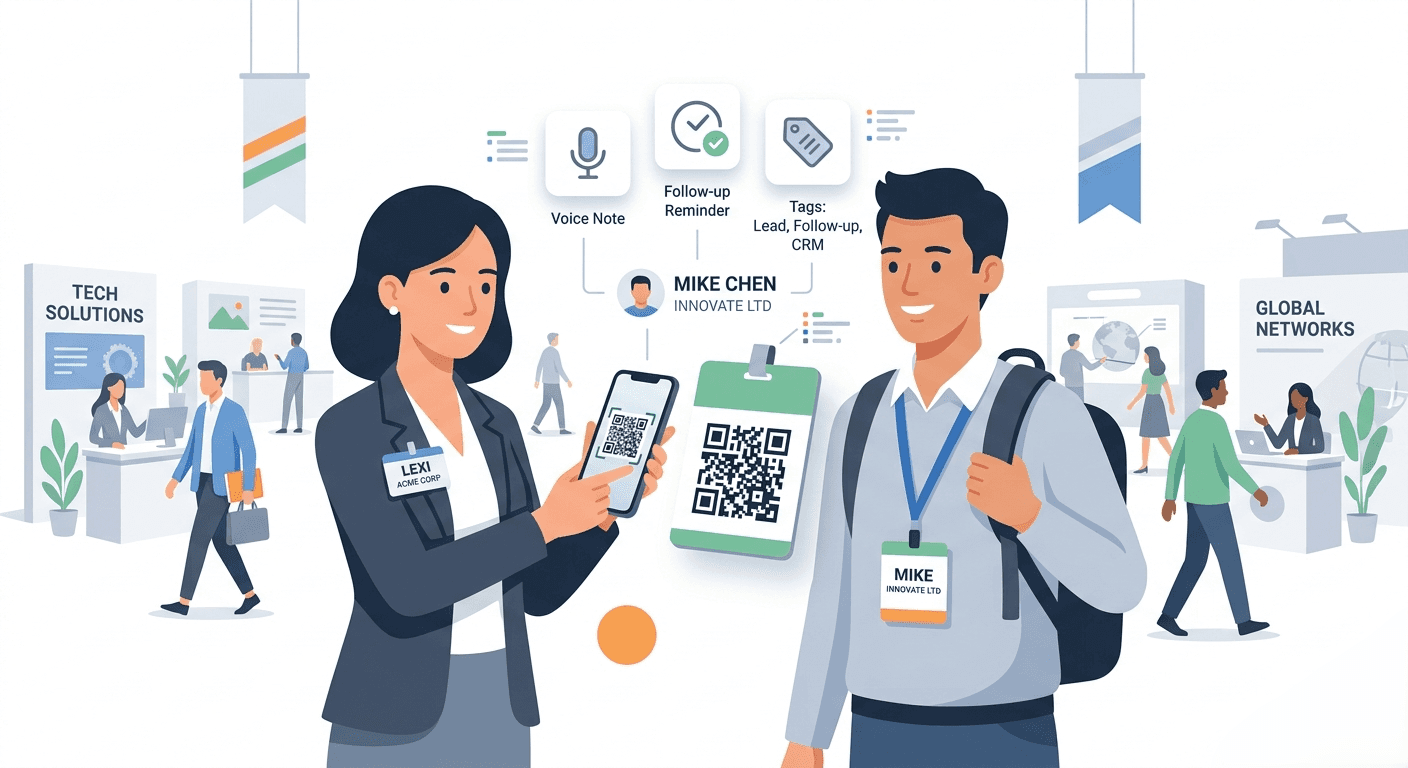
Why do most B2B follow-ups fail? It’s not the lead, it’s the missing context. Learn how to capture and use it effectively.
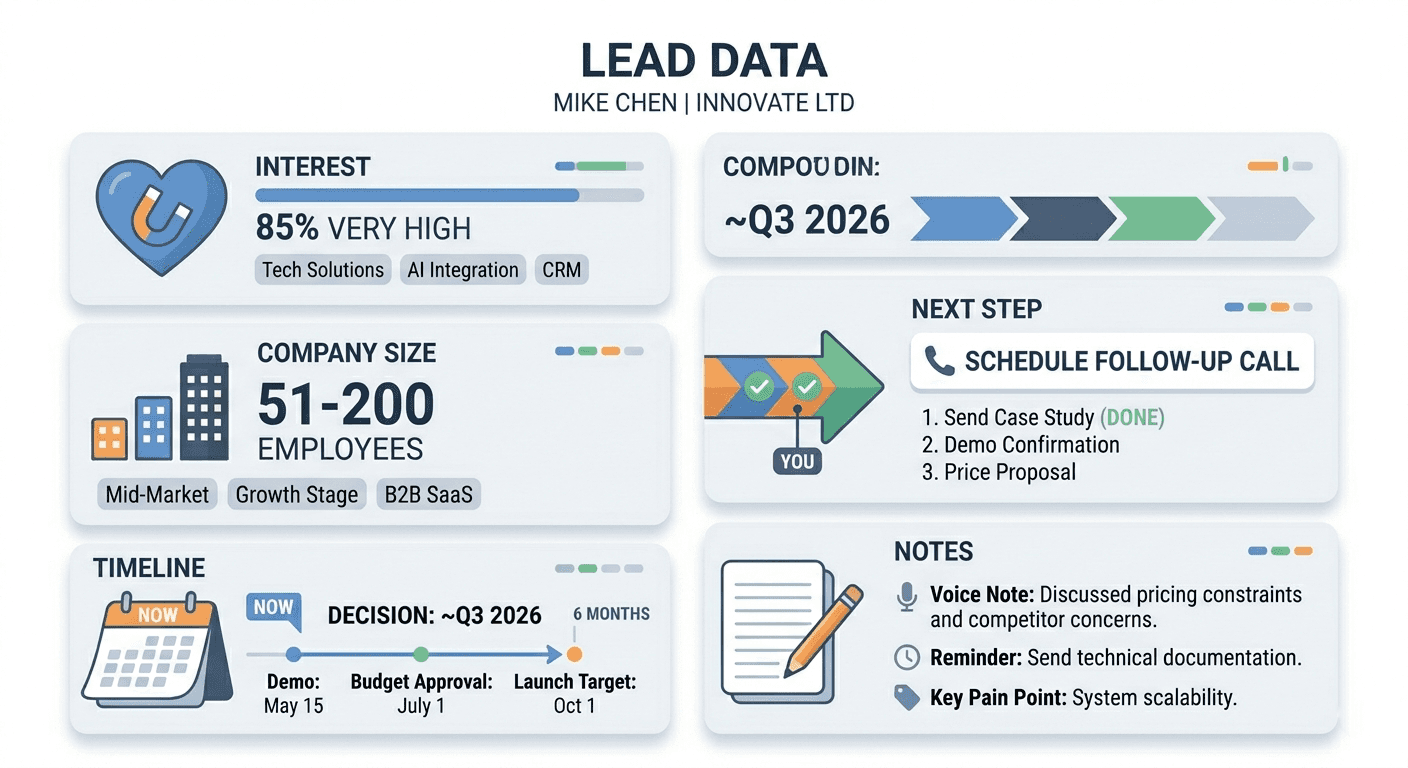
Most contacts go nowhere. The ones that convert are almost always the ones where the rep remembered why the person mattered.
Relationship-based selling is a B2B approach that treats the first exchange as the start of something, not the close of a transaction. The logic is straightforward: buyers who trust the seller buy more, stay longer, and refer more often. The sale is a natural outcome of a relationship built with deliberate attention over time.
That sounds simple. In practice it collapses at the first step, which is capturing who you met and why they matter, before you meet the next person.
The difference from transactional selling shows up not in the pitch but in what happens after it. A transactional seller sends a proposal after the first meeting. A relationship seller sends something that proves they were listening: a relevant article, a specific follow-up on something the buyer mentioned, a connection to someone who can help. The sale, when it comes, feels like the natural next step rather than a push.
The Problem With Just Collecting Contacts
A name, a company name, and an email address tell you almost nothing about how to open the next conversation.
The uncomfortable truth about most B2B networking is that it produces a lot of contacts and very little context. Business cards get scanned. Badge QR codes get read. Spreadsheets fill up. And then nothing happens, not because salespeople are lazy, but because the information captured was never good enough to act on.
Without context, every follow-up starts from zero. When every follow-up starts from zero, most of them never happen at all.
Research on B2B sales patterns consistently shows that most positive replies come from follow-up messages, not first contacts. The first email opens a door. The follow-up is what walks through it. But only if the rep still has something specific to say. |
The 48-Hour Context Decay Problem
Within two days of a conference or trade show, most reps cannot recall the specifics of individual conversations. They remember faces, maybe companies, but not the detail that changes a follow-up from generic to compelling: the product line the buyer was evaluating, the timeline they mentioned, the objection they raised, the competitor they were comparing against.
That detail is what relationship selling runs on. Lose it, and you lose the relationship before it begins.
What Happens When Follow-Up Slips
The cost of a missed or delayed follow-up is not just one lost contact. It compounds across the team:
Context decays. The person you met forgets the conversation. You forget what made them worth prioritising.
Warm leads go cold. A contact who was genuinely interested at the stall becomes a stranger by Day 3.
Attribution breaks. Without clean source fields and follow-up records, you cannot connect event spend to pipeline.
Teams diverge. Without a standard process, some reps follow up on Day 1 and others on Day 10. Reporting becomes unreliable.
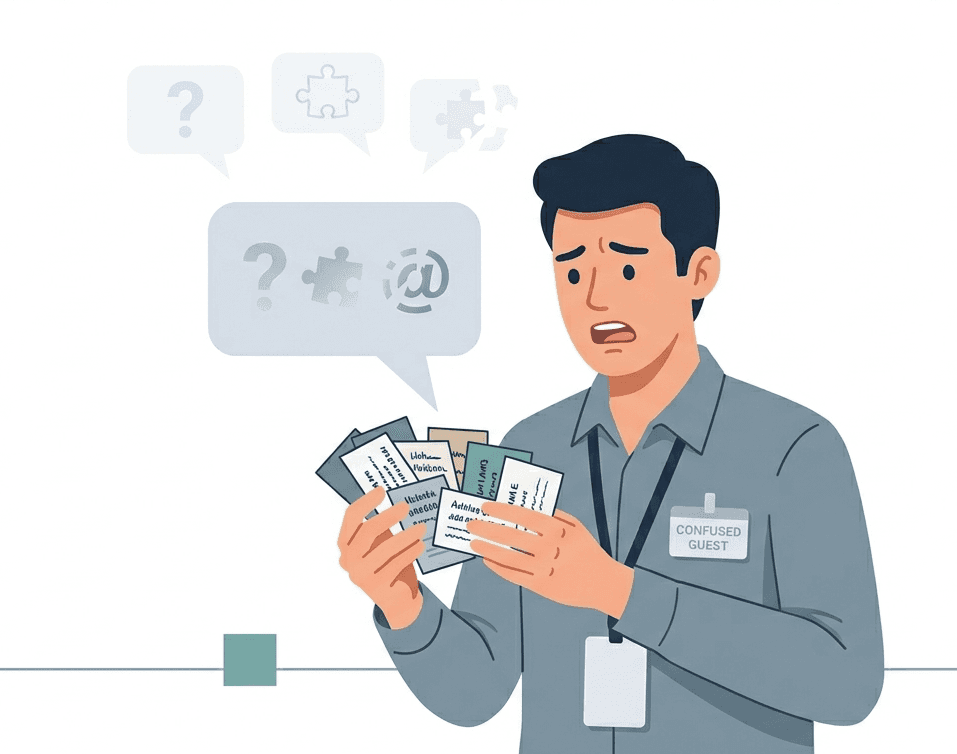
Context is not a single piece of information. It is a small set of facts that, together, make the relationship recoverable and the follow-up personal.
The 5 Pieces of Context Every Sales Rep Should Capture
Context Signal | What to Capture | Why It Matters |
Interest or intent | Which product, feature, or use case they mentioned | Determines which sequence or talk track to use |
Fit signal | Company size, team size, current stack or pain point | Qualifies the lead without a separate discovery call |
Timing | When they are evaluating, planning, or budgeting | Sets urgency and follow-up cadence |
Agreed next step | What you said would happen after the event | Makes the follow-up feel expected, not cold |
Conversation nuance | Something specific they said: a preference, concern, or detail | The ingredient that makes a follow-up feel personal |
At minimum, capture the interest area, one fit signal such as company size or current pain, the agreed next action, and one specific detail from the conversation that only you could know. If time is short, a 10-second voice note recorded immediately after the exchange, before the next conversation starts, is more accurate and more useful than a form filled in hours later when the detail has already blurred.
The theory of relationship selling is well understood. The execution is where it breaks down, almost always at the capture moment.
Before the Meeting
Relationship sellers prepare. Before walking the floor, they define the handful of qualifiers that matter: interest level, product line, buying timeline, priority. These become the questions they ask in every conversation and the fields they capture against every contact. Consistency here is what makes the resulting data useful for the team, not just the individual.
During the Exchange
The exchange of a card or a badge scan is not the end of the capture process. It is the beginning. The relationship seller uses that moment to add the context the card cannot carry: a Intent Signal for interest level, a tag for the product line discussed, a 10-second voice note summarizing what was said. All of this takes under 30 seconds. None of it will be recoverable in 48 hours if not captured now.
After the Event: The Follow-Up Window
The follow-up window for a warm event lead is short. Outreach within 24 hours of a conversation outperforms outreach at Day 3 or Day 5 by a significant margin in B2B contexts. The relationship seller who captured context can act within that window. The rep who captured only a name and email cannot.
Scenario | Optimal window | Why it matters |
Post-event contact | Within 24 hours | Memory and context are strongest. The follow-up feels like a continuation. |
Sales cold outreach | Day 1, Day 4, Day 10 | Three-touch sequences over 10 days cover the majority of response probability. |
Dormant connection reactivation | Within 3 days of the trigger | A relevant trigger, such as a new role or announcement, is the hook. It expires quickly. |
The business card scanner category has historically been evaluated on one axis: OCR accuracy. That is the wrong axis.
Can it read the text on the card reliably? That is a necessary baseline. But it is not the capability that separates relationship sellers from contact collectors. The capability that matters is context capture. Can the tool hold the conversation, not just the contact?
Evaluation axis | Contact-first tools | Context-first tools (e.g., Habsy) |
Core output | Name, company, email, phone | Contact plus interest, notes, reminder, qualifier fields |
Follow-up enablement | None. Rep must reconstruct from memory. | Built in. Reminder plus voice note plus Intent Signals at capture. |
CRM readiness | Raw contact import | Mapped CSV with owner, source, campaign, and next action date |
De-duplication | Post-import manual review | De-duplication with option to merge or delete the duplicated contact |
Offline capability | Often limited | Full capture offline. Sync when connected. |
A basic scanner captures the card and stops there. A context-aware tool treats the scan as the beginning of a record: interest level, conversation notes, agreed next step, and a follow-up reminder all added at the same moment. That distinction determines whether the rep has something specific to say in tomorrow's outreach or has to reconstruct the conversation from a name and a job title.
Habsy is built around the moment of conversation, not the moment of follow-up. If you capture the right context at capture time, the follow-up becomes significantly easier to personalise and significantly more likely to happen on time.
1. Scan. No typing. | QR badges and business cards captured in seconds. Structured contact record created instantly. Works offline. |
2. Note it before you forget it. | 10-second voice note attached to the contact at the stall. The intent, the concern, the product interest: preserved before the next conversation starts. |
3. Set the reminder. Walk away. | One tap: Tomorrow 10:00. The follow-up is scheduled before you leave the booth, not added to a mental to-do list that empties by morning. |
4. Log the qualifiers. Know who to call first. | Interest level, product line, buying timeline, priority: captured at scan. A saved search the next morning surfaces the hottest contacts in seconds. |
5. Follow up with context, not guesswork. | Voice note, intent signals, and company context give your next message a real foundation. Habsy exports a clean, mapped CSV so your CRM import is repeatable and attributed correctly. |
What this looks like in practice |
A booth manager at an industrial expo scans 60 badges over two days. For each conversation that matters, she drops a 10-second note: 'Interested in the Pro line. Distributor network across Tamil Nadu. Wants pricing by end of month.' She taps Tomorrow 10:00 before moving on. The next morning, she opens the saved search for Interest = Pro, Priority = P1. Every contact on that list has a voice note. Every follow-up message can reference something specific. None of them feel like they were sent to a list. |
Most follow-up failures are not motivation failures. They are capture failures that happen hours earlier.
Mistake | Why it happens | Fix |
No qualifier captured at scan | Rush hour, no schema agreed in advance | Define a 3-field capture schema before the event: interest, product line, priority |
Context lost by Day 2 | Mental note only; no voice note or written field | 10-second voice note immediately after each conversation |
Follow-up never scheduled | Rep intends to do it at the hotel; forgets | Set the reminder at the booth, not at the desk |
Generic message sent to everyone | No contact-level context to draw on | Segment by saved search before drafting any message |
Duplicates reach the CRM | Multiple reps scan the same badge across shifts | Manage the Duplicated Leads |
No attribution in CRM | Source and campaign fields not mapped at export | Use a saved CSV preset with Source and Campaign included |
Building a Context-First Contact System: Final Takeaways
Relationship-based selling is not a method. It is a commitment to remembering why the person in front of you matters, and acting on that understanding before the window closes.
The practical implication is simple: capture context at the moment of exchange, not later. Later is too late in most event and field sales situations.
A 6-field schema agreed before the event, a voice note habit established on Day 0, and a one-tap reminder set before walking away are the three operational habits that turn relationship selling from an intention into a consistent workflow. None of them require significant time at the stall. All of them make the follow-up substantially easier to personalise and substantially more likely to happen within the window that matters.
Building relationships in B2B sales means making every follow-up prove that you were listening. Reminders, voice notes, and a simple qualification schema are the tools that turn that intention into a habit. The reps who do this consistently are not more motivated than the ones who do not. They simply have a capture process that preserves the context long enough to act on it.
Habsy: Built for Day-0 and Day-1 Follow-Up Readiness
Your contacts stay under your control. Export or delete any time. |
Frequently Asked Questions
1. What is relationship-based selling?
A B2B sales approach that prioritises long-term trust over short-term transactions. The relationship seller leads with understanding of the buyer's situation, pressures, and goals. The sale, when it comes, is a natural outcome of a relationship built deliberately over time.
2. How does it differ from transactional selling?
Transactional selling optimises for the fastest close. Relationship selling optimises for trust, which tends to produce larger deals, higher retention, and more referrals. The key difference is what happens after the first meeting: a transactional seller sends a proposal; a relationship seller sends something that proves they were listening.
3. Why do most B2B sales follow-ups fail after networking events?
Because context decays within 48 hours and no capture process preserved it. The rep cannot write a personalised message when they cannot remember the specific conversation. Generic follow-ups arrive too late and convert at a fraction of the rate of specific, timely ones.
4. What information should I capture when meeting a prospect?
At minimum: their interest area, one fit signal, the agreed next action, and a short note about something specific from the conversation. A 10-second voice note captured immediately after the exchange is more accurate and more useful than a form filled in at the end of the day.
5. How can a business card scanner help relationship-based selling?
A basic scanner captures the card. A context-aware tool captures the relationship: interest level, conversation notes, agreed next step, and a follow-up reminder, all at the moment of exchange. The difference is whether tomorrow's outreach can reference the actual conversation or has to start from scratch.
6. How does Habsy support relationship-based selling?
Habsy captures context at the moment of conversation, not after the event. Badge or card scan, voice note, Intent Signals, and a one-tap reminder are all set before you walk away. The next morning, your saved search surfaces the highest-priority contacts with full context attached. The CSV export includes owner, source, and campaign fields so the handoff to your CRM is clean and attributed.
7. Does Habsy integrate with CRM tools?
Habsy is CSV-first and works with any CRM that supports CSV import, including HubSpot, Zoho, and Salesforce. Mapping presets save your column structure so each import is repeatable. Export includes owner, source, and campaign fields for attribution.
8. How many contacts can I scan at an event?
Habsy supports batch scanning of approximately 150 cards in around 5 minutes, plus individual QR badge scans during conversations. All captures work offline and sync when connectivity returns.
Related reading:
Event lead capture with Habsy | Contact intelligence enrichment