Blog
In the high-stakes world of B2B sales and networking, a paper business card is often little more than a "bookmark" for someone’s pocket: destined to be forgotten or lost before the event even ends.
But a Smart Business Card isn’t just a digital version of your contact info; it is a programmable sales tool. If you are still just "tapping and hoping," you are missing out on its true power.

Here are 6 high-impact ways to use your smart business card to transform every handshake into a data-driven opportunity.
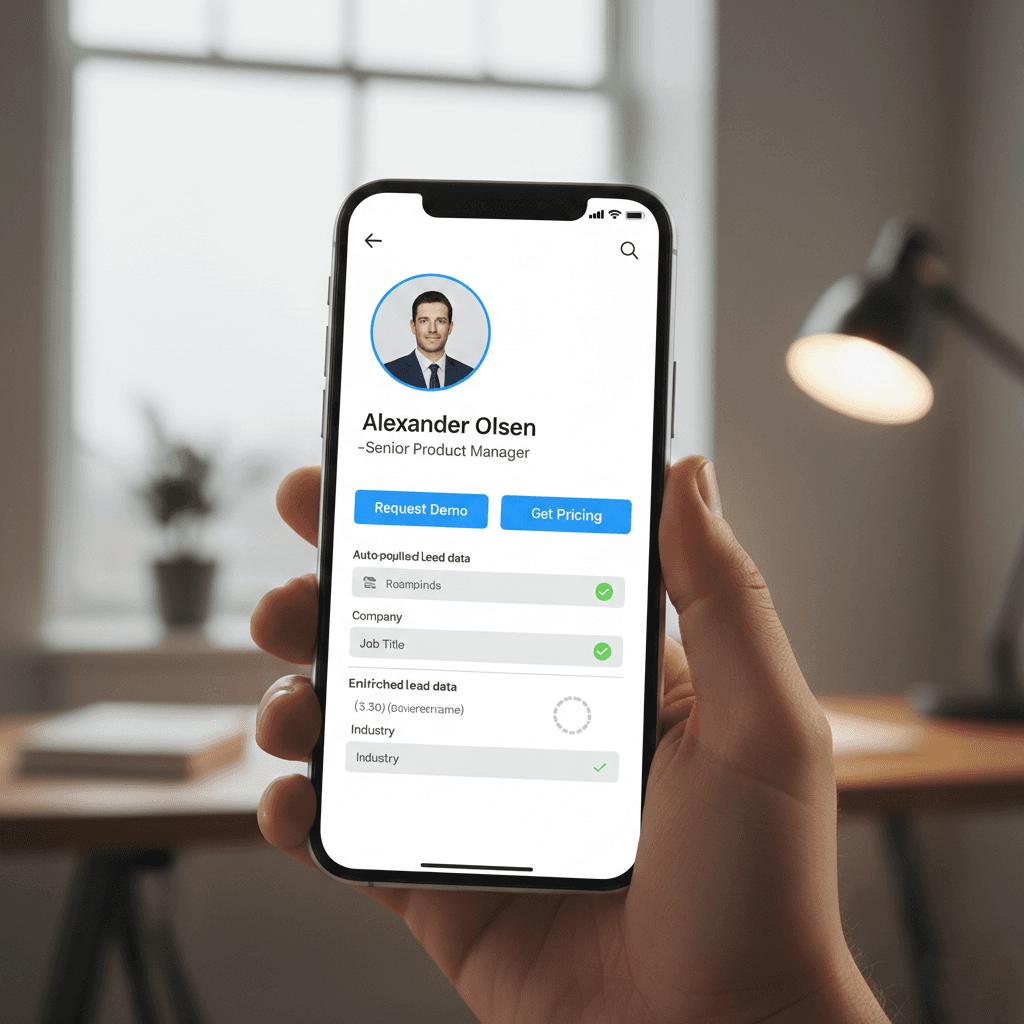
A smart business card should not end at contact exchange. It should initiate a structured buyer journey.
The Strategy: Design your smart card profile as the first stage of your funnel. Instead of a static contact page, direct prospects to a segmented landing experience based on their interest, such as product demos, industry-specific case studies, or pricing guides.
Why it works: Buyers want relevance. When your card routes them to content tailored to their problem, you reduce decision fatigue and accelerate movement toward action. The handshake becomes the top of a measurable conversion funnel.
2. Instant Qualification at the Point of Interaction
Most networking fails because qualification happens too late.
By the time you sit down to review your collected contacts, the context is blurred. You are left guessing who was serious, who was polite, and who was simply browsing. Without early qualification, every lead looks equal, and that is where pipeline efficiency collapses.
The Strategy:
Turn your smart business card into a micro-qualification tool. Instead of only displaying your contact information, embed interactive prompts or quick selection buttons directly on your profile.
Examples:
“Interested in a demo”
“Request pricing”
“Looking for distribution partnership”
“Exploring solutions for Q2”
“Just researching”
You can also include light self-identification fields such as:
Timeline: Immediate / 1–3 months / Just exploring
Budget Range: Confirmed / Evaluating / Not allocated yet
Role: Decision-maker / Influencer / Researcher
These subtle prompts feel conversational, not interrogative. The key is to design them as helpful navigation choices rather than forms. When structured correctly, prospects willingly categorize themselves.
The Outcome:
Instead of walking away with a stack of undifferentiated contacts, you walk away with ranked intent signals.
High-intent prospects are automatically flagged for priority follow-up. Mid-level interest enters a structured nurture sequence. Low-intent contacts are documented without draining your sales team’s attention.
The impact compounds:
Sales reps focus only on qualified opportunities.
Follow-up messaging becomes hyper-personalized.
Pipeline forecasts become more accurate.
Marketing gains clean segmentation data for retargeting.
Most importantly, qualification happens while emotional engagement is still high. The prospect self-selects their buying stage in the moment, which dramatically increases response rates later.
When qualification is immediate, networking stops being hopeful collection and becomes strategic pipeline building.
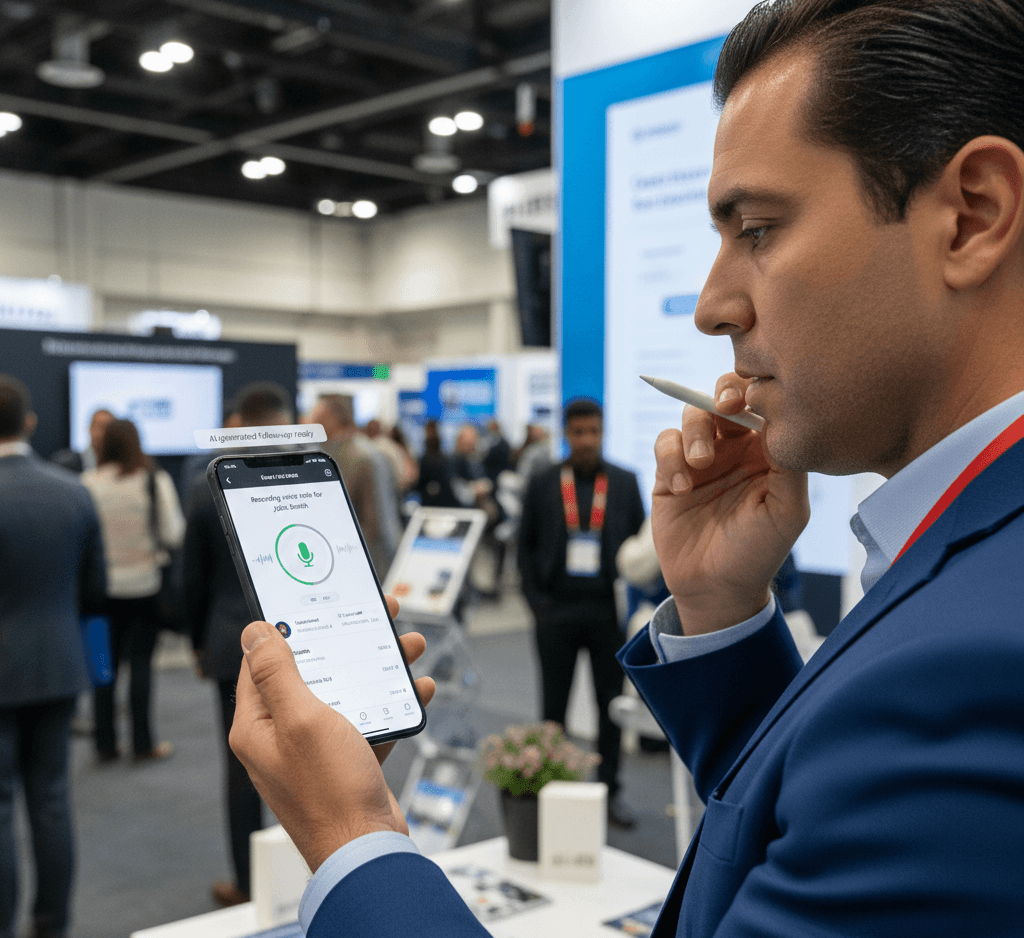
The real value of a meeting is not the contact you collected. It is the details you discussed.
Names and titles are easy to remember. Objections, budget signals, decision timelines, and hidden motivations are not. Within hours, nuance disappears. Within days, everything blends together.
The Strategy:
Capture context immediately. Log key discussion points, objections, buying stage, and potential deal size through structured notes or quick voice capture attached directly to the contact record. Keep it fast, focused, and tied to intent.
Examples:
“Concerned about integration timeline”
“Budget confirmed for Q3”
“Needs approval from procurement”
“Comparing 2 vendors”
This takes less than 30 seconds but preserves the strategic layer of the conversation.
The Benefit:
Your follow-ups become surgical instead of generic. You reference exact pain points, next steps, and decision triggers.
Instead of “Great meeting you,” you send,
“Following up on the integration timeline question you raised.”
Precision builds trust. Relevance increases response rates. Clear context shortens sales cycles.
When you capture context immediately, networking becomes informed execution rather than guesswork.
Speed wins deals.
The longer you wait to follow up, the more your conversation fades into background noise. In competitive markets, the first relevant message often captures the opportunity.
The Strategy:
Trigger immediate, personalized outreach across multiple channels. Send a contextual WhatsApp message, a short email, or a LinkedIn connection within minutes of the interaction.
Keep it specific. Reference one detail from the conversation and propose one clear next step.
The Effect:
You stay top of mind while interest is still high. Multi-channel visibility increases reply rates and reinforces professionalism.
Fast follow-up signals seriousness. Seriousness builds trust. Trust accelerates decisions.
Not every deal closes with the person you meet.
Many prospects act as gatekeepers or internal champions. If your positioning gets diluted when passed along, momentum stalls.
The Strategy:
Structure your smart card profile to be forward-ready. Include a concise value summary, a short explainer video, and a clear call to action.
Make it easy for someone to say,
“Here, take a look at this.”
The Benefit:
When your contact shares your profile internally, your message remains intact. Decision-makers see a clear, confident pitch rather than a second-hand explanation.
You control the narrative even when you are not in the room.
6. Team Visibility & Performance Tracking
Unmeasured networking produces unpredictable revenue.
When smart card usage lives in individual silos, leadership cannot see pipeline creation in real time.
The Strategy:
Connect smart card interactions to Habsy Platform. Track capture volume, qualification rates, follow-up speed, and conversion signals across the team.
Measure:
Leads captured per event
High-intent percentage
Time to first follow-up
Meetings booked
The Benefit:
Networking becomes accountable. High performers stand out. Gaps become visible. Coaching becomes data-driven.
Instead of hoping events generate ROI, you can see it happening live.
When visibility improves, execution improves. When execution improves, revenue follows.
To truly maximize the potential of these six strategies, you need a system that does more than just share a link. While a standard smart card gets your info onto their phone, Habsy ensures their info gets into your pipeline with zero effort.
AI-Powered "Two-Way" Exchange Habsy transforms your smart card into a two-way intelligence hub. When someone Scans your QR, Habsy prompts them to share their details back instantly.
Voice-to-CRM Context Sales managers know that "context" is the first thing lost after a busy event. With Habsy, you can record a quick voice note immediately after a meeting. Habsy transcribes it and attaches it to the lead record, ensuring your sales rep has the full story for their follow-up call.
Batch Scanning & Offline Reliability Coming back with a stack of physical cards? Habsy’s Batch Scan feature can digitize up to 150 cards in 5 minutes with 99% accuracy. Plus, our Habsy Platform allows you to centralize your team's networking data to ensure no lead is left behind. Our Offline Mode also ensures you can capture every lead even in crowded convention centers with no Internet: everything auto-syncs the second you are back on the grid.
Feature | Standard Smart Card | The Habsy System |
Data Flow | One-way (You to them) | Two-way (Automated Lead Capture) |
Context | None (Just a contact) | Voice Notes + AI Context Enrichment |
Team Tracking | Impossible | Centralized Platform to manage |
Follow-Up | Manual | AI-Generated Personalized Templates |
A smart business card is only as “smart” as the strategy behind it. Whether you are a solo founder or managing a 50-person sales team, moving beyond the digital handshake into automated lead capture is what separates top performers from the rest.
Ready to turn your business cards into a revenue engine?
Experience the Future: Visit the top of our homepage to Book a Demo and see the Habsy system in action.
Get Strategic:Chat with us on WhatsApp to learn how to integrate these 6 strategies into your team’s workflow today.
FAQs:
Frequently Asked Questions
1. How is a Habsy smart business card different from a digital business card app?
A. While a standard digital card app simply shares your contact details, a Habsy smart business card acts as an active sales tool. It uses automated workflows to book meetings, host portfolios, and send data directly into your CRM. It is designed to close deals, not just exchange phone numbers.
2. Does the person I meet need the Habsy app to receive my information?
A. No. One of the biggest advantages of the Habsy system is that it is friction-free. The recipient does not need an app or a specific device to view your profile or share their details back with you. They simply tap your card or scan your QR code to open your interactive landing page in their mobile browser.
3. Can I update my information in the Habsy Platform if my details change?
A. Yes. Unlike traditional paper cards that become obsolete the moment your details change, Habsy cards are fully programmable. You can update your contact info, change your portfolio links, or swap out your video pitch in real-time through the Habsy Platform without ever needing to print a new card.
4. How does the Habsy "two-way" contact exchange work?
A. When someone Scans your Digital QR card, they are presented with your digital profile. A prominent "Share Your Info" button prompts them to send their details back to you. Habsy then uses AI to enrich that data with LinkedIn profiles and company missions, ensuring you capture high-quality leads instantly.
5. Is the data captured by Habsy secure for enterprise use?
A. Security is a top priority for B2B organizations. The Habsy system uses encrypted data transfers and offers a centralized Enterprise Platform. This allows sales managers to maintain ownership of lead data even if a representative leaves the company, ensuring all networking intelligence remains a secure company asset.