Blog
Improve visibility, streamline follow-ups, eliminate CRM errors, and accelerate team performance with unified, real-time insights.
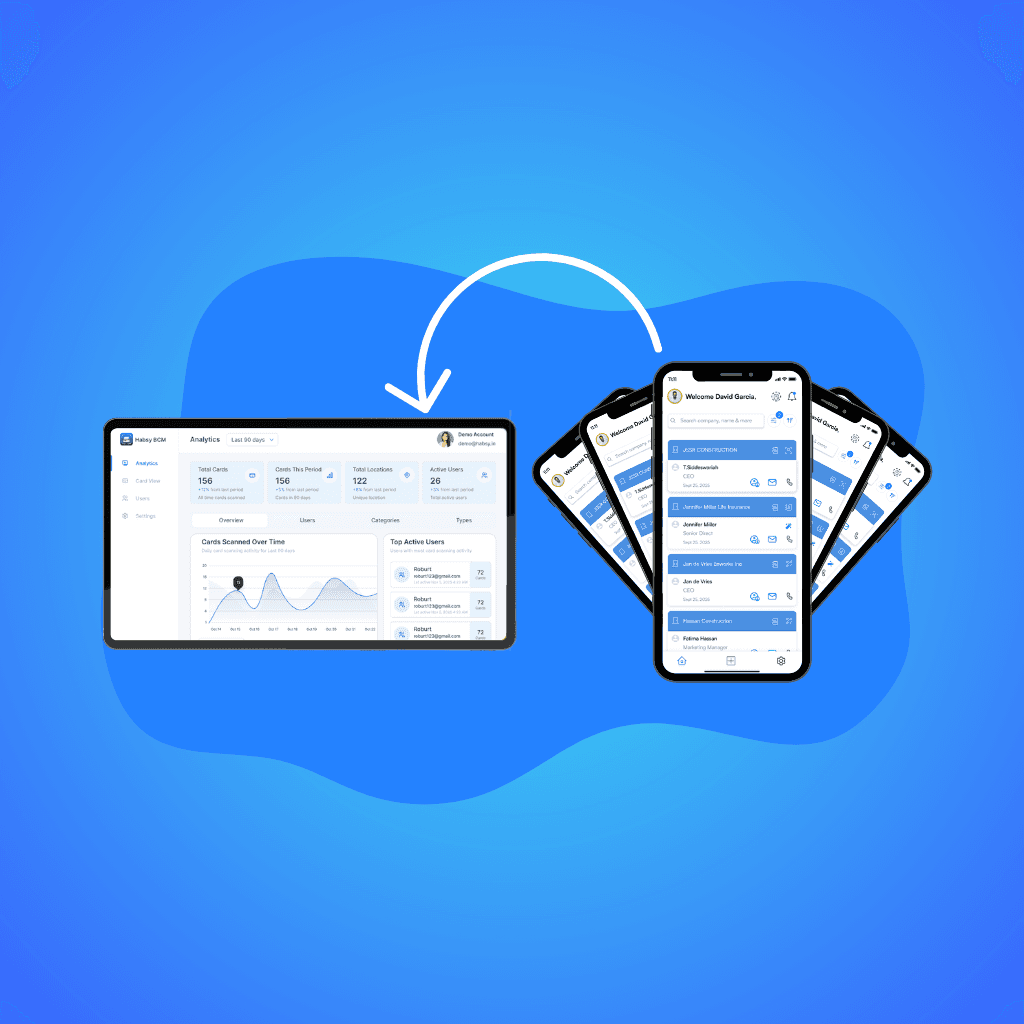
Discover how the Habsy Business Card Manager and Enterprise Dashboard centralize mobile lead capture, business card scanning, multilingual business card OCR, and trade show lead data.
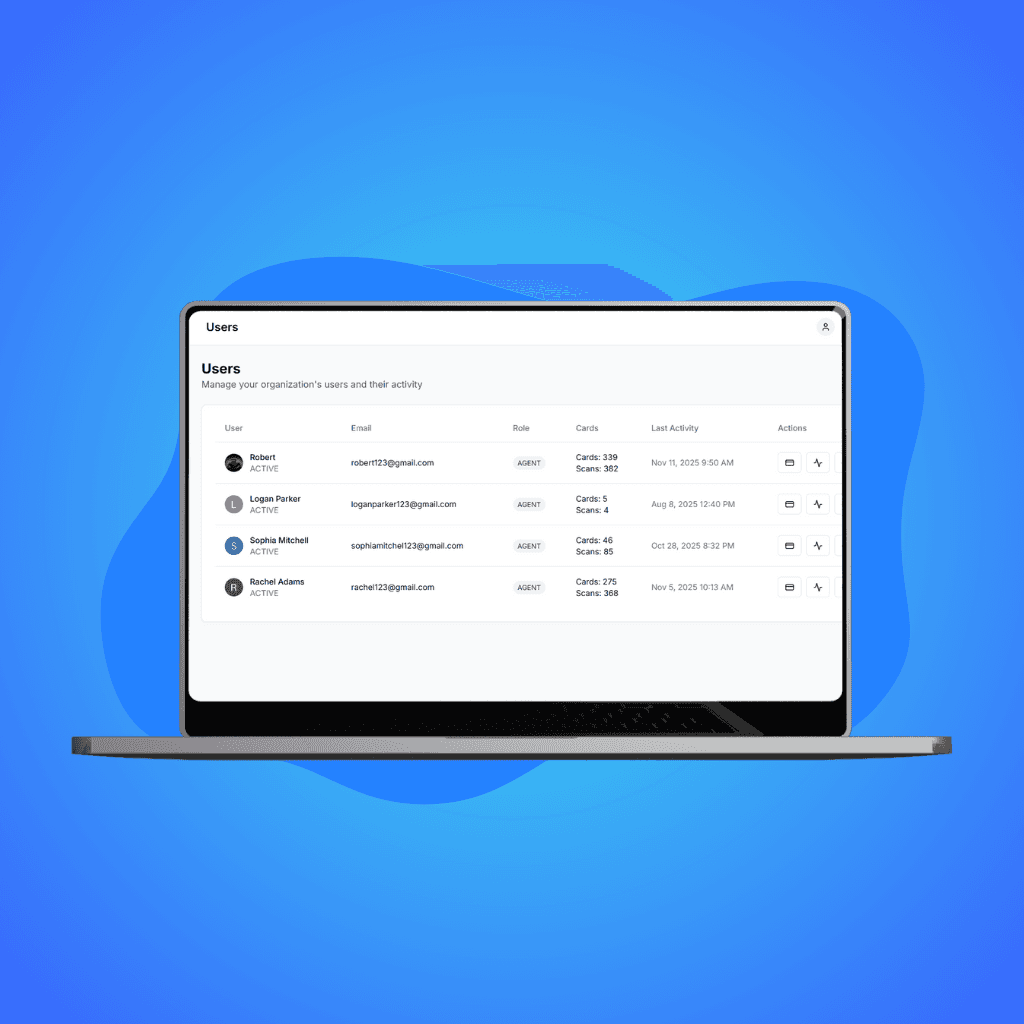
In modern field workflows, teams often rely on mobile tools like digital business cards, business card scanner app solutions, and platforms that help scan business cards to CSV. Even the best business card scanner apps or multilingual business card OCR tools cannot solve the deeper challenge alone - unstructured data. Habsy Business Card Manager bridges this gap by centralizing every contact and removing fragmentation. In a world where teams rely on mobile tools, business card manager apps, trade show lead capture app solutions, and exhibition lead capture software, the need for a unified system becomes even more critical. Whether contacts come from a business card scanner app, a multilingual business card OCR tool, digital business cards, or SMB contact management app workflows, fragmented data slows growth. Habsy Business Card Manager brings all these inputs together in one place. As a sales manager, I see the story behind every business card my team collects. A meaningful conversation, a potential deal, a spark of interest - all captured in seconds, yet so easy to lose in the rush of busy days.
What frustrated me wasn’t the work. It was the fragmentation. Contacts stored in phones, photos buried in galleries, notes forgotten in chats. I could feel the effort my team was putting in, but I couldn’t see it clearly.
Centralizing our networking data changed that feeling completely. To understand why mobile-first capture matters so much in this process, you can also read our guide on Mobile-First vs Desktop-First Lead Capture. It gave me a sense of control, clarity, and confidence not by adding new tasks, but by bringing everything together in one place.
Why Centralization Matters
At first, scattered contact data feels harmless. A few business cards, a couple of WhatsApp photos, maybe some notes saved on a phone. But as the days get busier, the gap widens between what my team captures and what the business can act on.
Without a centralized system, I lose visibility. Leads slip through unnoticed. Follow-ups depend on memory instead of process. And CRM quality becomes harder to maintain.
Centralization gives me and my team one place where every connection stays visible, usable, and accountable.
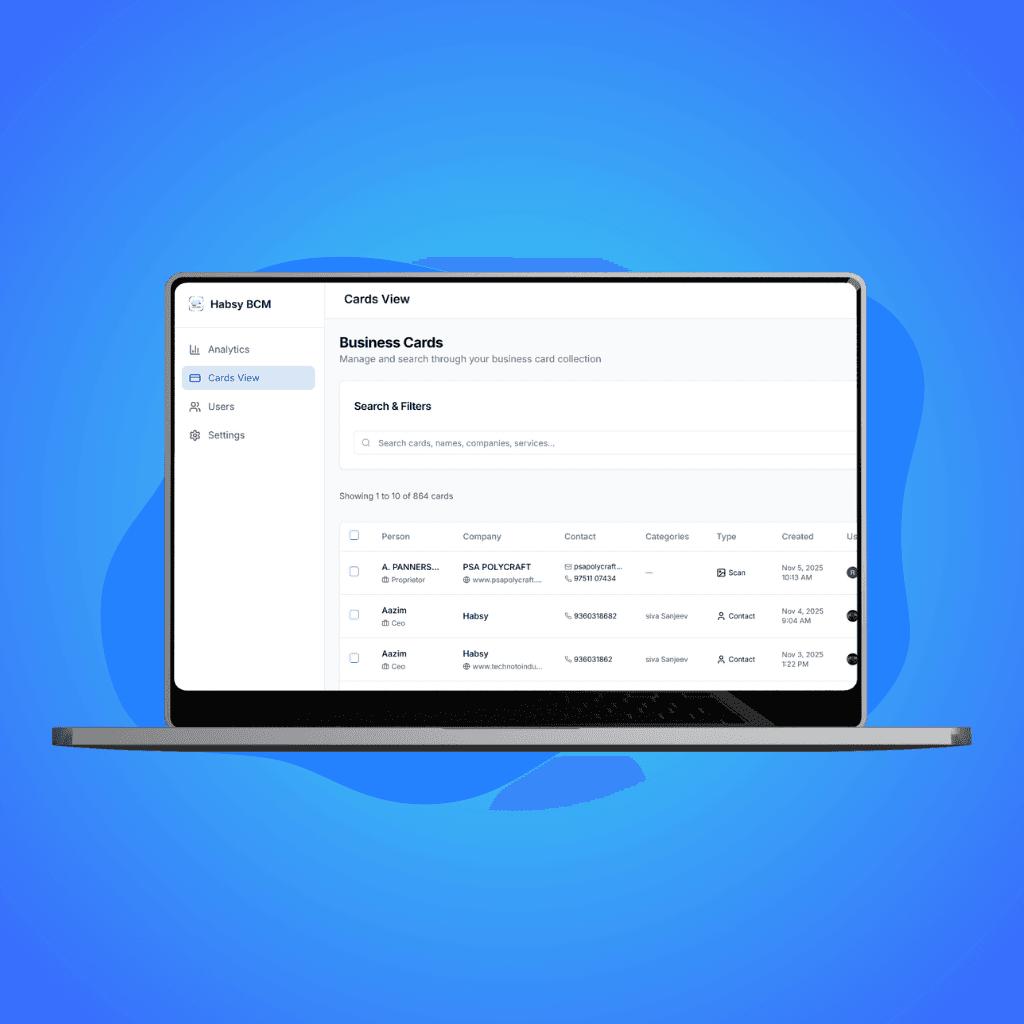
Managing a sales team is more than tracking targets. I deal with operational challenges that directly influence performance.
My reps store contacts differently, upload data at different times, and work with different levels of structure. The result is a mixed picture that is hard to interpret without a unified system.
Here are the problems I face most often:
1. Inconsistent data capture
Everyone has their own method. Some upload instantly. Others wait. A few forget. This creates gaps in understanding how many leads were actually collected.
2. Unclear follow-up timelines
Follow-ups depend on individual reminders rather than a shared workflow. It becomes difficult for me to know what has been done and what hasn’t. To understand how structured reminders improve follow-up consistency, read our deep dive on One-Tap Sales Follow-Up Reminders.
3. Limited visibility
Because updates are inconsistent, I cannot easily see where the team is investing time or which reps are actively capturing leads.
4. Difficulty evaluating event performance
When data lives in phones, notebooks, and apps, it is nearly impossible to determine which events truly generated meaningful opportunities.
5. Unreliable CRM inputs
Missing details, duplicates, and inconsistent formatting make CRM data messy. This affects reporting, segmentation, and automation.
Centralization removes these inconsistencies and gives me and my team a solid operational foundation.
Once everything flows into one system, I noticed my team working more efficiently and consistently. Centralization strengthens multiple parts of the sales workflow.
Here is where I see the biggest improvements:
1. Activity visibility
I can see who captured leads, when they did it, and from which location. I no longer need to ask for updates, and this has helped me identify patterns in individual performance. For example, during a recent three-day event, I could instantly see which reps were engaging the most visitors, which helped me reassign support strategically on Day 2.
2. Data consistency
All contacts follow the same structure. No messy entries, no irregular formats, and far fewer corrections. My CRM cleanup time dropped significantly. A real example was during our quarterly upload, where we usually spend hours fixing inconsistent fields. With centralized structure, the import took less than ten minutes without errors.
3. Reliable Oversight Beyond Individual Rep Habits
Before centralization, I relied heavily on each rep’s personal discipline. If someone forgot to log a lead, delayed a follow-up, or misplaced a business card, I had no way of knowing. Their memory became the system, and that made consistency impossible.
Habsy removes that uncertainty completely. Every lead is captured with time, date, and location data, so I can see exactly when and where contacts were collected. I no longer depend on verbal updates or scattered notes to understand activity. If a rep slows down, skips uploads, or hesitates to follow up, it becomes visible instantly - not weeks later when the opportunity is already gone.
This shift from guesswork to reliable oversight changed the way I manage my team. I can coach proactively, ensure accountability, and keep momentum steady across every event, city, and campaign.
4. Event performance tracking
I can compare events, regions, and campaigns using real data instead of assumptions. After reviewing which events delivered higher engagement, I shifted our budget from low-performing expos to ones that consistently produced better-quality leads.
5. Team alignment
The team follows the same categories and expectations, making collaboration smoother. This reduced miscommunication between field reps and SDRs because everyone finally used the same vocabulary, priorities, and tags when capturing or reviewing contacts.
6. Reporting accuracy
I can finally share accurate numbers without merging files or waiting for late updates. Weekly reports that once took hours now take minutes because I pull them directly from the dashboard.
A centralized workflow removed friction for my entire team and gave me the clarity I needed to coach effectively.
The Habsy Enterprise Dashboard became the system that tied all of this together for me. Beyond centralizing data, it gave me a way to measure performance, spot trends, and understand my team’s networking behavior at a level I never had before.
One of the most valuable components for me is the Team Analytics section. It gives me fast, clean insights without digging through spreadsheets. In any time range, I can instantly see:
Card Activity Metrics – Total Cards Scanned, All-Time Cards Scanned, Cards This Period, and Cards in a Selected Period give me a clear snapshot of both overall momentum and how we performed during specific events or campaigns.
Location Metrics – Total Locations Captured and Unique Locations show how widely the team is networking and which regions or zones are generating the strongest opportunities.
Team Participation Metrics – Active Users highlights who is consistently contributing and helps me spot where additional support or coaching may be needed.
These insights let me spot momentum, identify slowdowns, and quickly understand where our best opportunities come from. It turns raw activity into clear direction. The Habsy Enterprise Dashboard became the system that tied all of this together for me. It solved the gaps I struggled with without requiring my reps to change how they work.
It connects everything my team captures into one organized, structured, real-time dashboard.
Here is how Habsy fixes each problem I deal with:
1. Unified and Consistent Data Capture
Habsy enforces a unified structure. Every contact we capture follows the same fields and format across my entire team. This consistency helped eliminate the confusion we previously faced during multi-city events, where each rep documented leads differently. Now, I can compare data across regions without worrying about mismatched formats.
2. Clear and Actionable Follow-Up Timelines
Reminders, notes, and interactions sync automatically. I can immediately see what is pending or overdue, which prevents valuable opportunities from slipping. For example, I once noticed a major prospect had not been contacted for two days. Because I caught it early through the dashboard, I reassigned the follow-up and saved the relationship.
3. Real-Time Visibility Into Team Activity
The real-time activity view shows who captured leads, where they captured them, and when. Habsy’s geotagging feature adds another layer of clarity by attaching precise location data to every capture. This helps me understand which zones, booths, or event sections are performing well and where engagement is dropping.
During a recent trade show, geotagging allowed me to see that one corner of the booth was drawing significantly more visitors. I used that insight to reassign support instantly, ensuring conversations flowed smoothly and no high-value traffic was missed. This level of visibility was something I never had before, and it completely changed the way I coach my team in real time.
4. Accurate Insights for Event Performance
Habsy gives me event and location-level insights, making it easy to compare which activities delivered quality opportunities. After reviewing these insights, I redirected budget away from a low-performing expo and reinvested in one that consistently brought high-conversion prospects.
5. Clean, CRM-Ready Data Every Time
The export is clean, complete, and consistent. Duplicates drop. Missing fields disappear. My CRM remains healthy. This directly improved the success rate of our email campaigns because the CRM no longer contained invalid or inconsistent contact information.
Habsy’s Excel export gives me quick, precise control over exactly what I need to pull. I can export contacts by custom date ranges, filter by category or tag, download all entries from the team, or isolate data from specific users during key events or campaigns.
This turns reports, audits, and targeted outreach into a fast, frictionless process. Every export follows a clean, structured format, so the file drops straight into any CRM without cleanup or reformatting. What used to take time and manual effort is now a simple, two-click handoff.
Habsy became the operational backbone for my team. It supports their workflow instead of disrupting it, and it gives me the clarity I need to lead with confidence.
Centralization reshaped how my team operates. With unified capture, real-time visibility, accurate event insights, structured follow-ups, CRM-ready exports, and built-in contact deduplication before CRM import, our workflow became faster, clearer, and far more predictable. Centralization reshaped how my team operates. With unified capture, real-time visibility, accurate event insights, structured follow-ups, and CRM-ready exports, our workflow became faster, clearer, and far more predictable.
No more chasing files or reconciling scattered updates. Everything appears instantly in one dashboard, organized and ready for action.
During a recent multi-city sprint, hundreds of leads flowed in without chaos. I could see which events performed best, who was most active, which zones drew the most engagement, and which leads needed immediate attention.
Centralization removed friction and created alignment. My team works simpler, I lead with clarity, and the business receives clean, reliable data that fuels growth.
Conclusion
Improve visibility, streamline follow-ups, eliminate CRM errors, and accelerate team performance with unified, real-time insights.