Blog
This guide breaks down 8 actionable networking tips built for the tools, platforms, and expectations of 2026. Whether you are a founder, sales professional, or small business owner, these strategies will help you build a stronger pipeline and more meaningful connections.
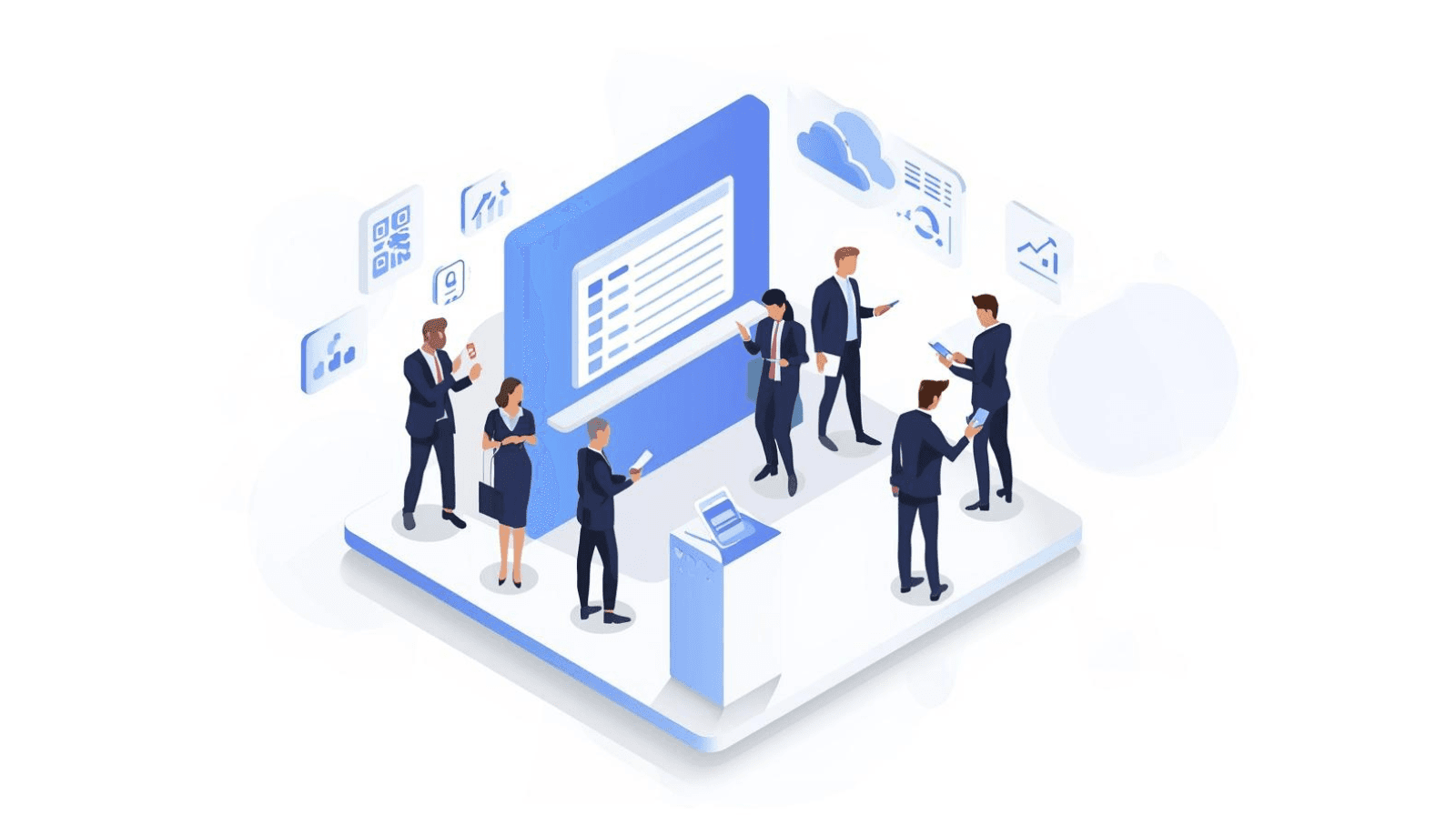
Build stronger business connections in 2026 with smarter networking, structured lead capture, and fast follow-up systems that convert conversations into meetings.
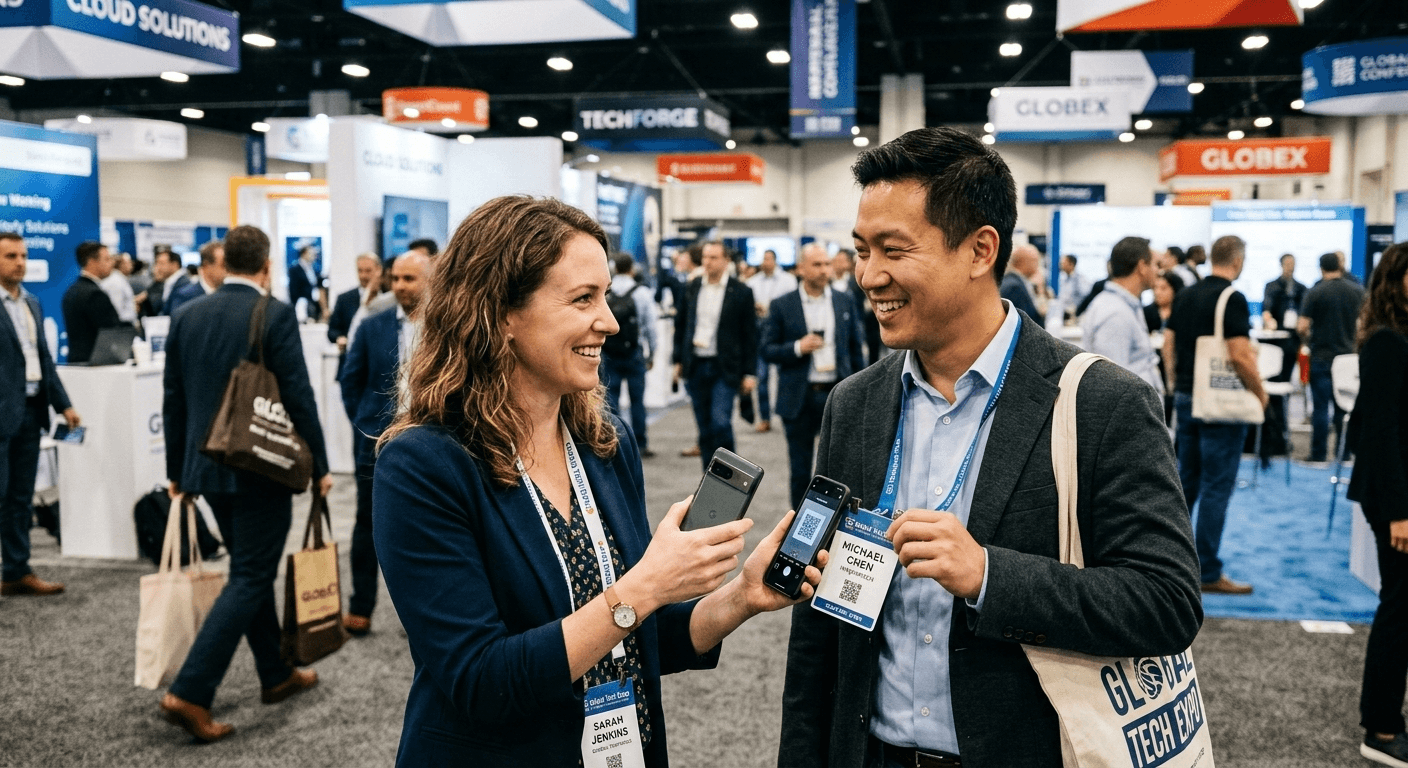
The fundamentals of networking (being curious, being genuine, and being consistent) have not changed. But the tools and context have shifted dramatically. In 2026, professional networking strategies that rely solely on physical cards and in-person introductions leave enormous value on the table.
Modern professionals are combining in-person relationship skills with digital networking trends that allow them to scale their efforts, stay organized, and follow up intelligently. If you are still treating networking as something that happens only at events, it is time to rethink your approach.
Why Traditional Networking Alone No Longer Works
Traditional networking has a measurable problem: most connections die within 72 hours. People leave events with pockets full of cards, good intentions, and no system. The follow-up never happens, and the opportunity evaporates.
The issue is not that in-person networking is ineffective. It is that the follow-up through infrastructure has historically been weak. Without a digital layer to capture, organize, and act on new contacts, even the best conversations fade into forgotten card stacks.
• Over 80% of business cards are discarded within a week of receipt.
• Most professionals can recall fewer than 20% of event contacts two weeks later without notes.
• The first networker to follow up after an event wins the relationship. Speed is everything.
AI Networking Tools 2026 Are Changing the Game
AI networking tools in 2026 have moved from experimental to essential. These smart networking tools help professionals do more with every connection: automatically enriching contact records with company data, suggesting optimal follow-up timing, identifying warm introduction paths, and flagging dormant relationships worth reactivating.
From AI-powered CRM assistants that write personalized follow-up emails to tools that scan LinkedIn profiles and generate conversation starters, smart networking tools are now accessible to professionals at every level, not just enterprise sales teams. The goal is less time managing contacts and more time building relationships.
2. Master Trade Show Networking With Smart Lead Capture
Trade shows and conferences remain among the highest-ROI networking environments available, but only for professionals who arrive with a plan. Knowing how to network at expos is not just about having a great booth or a memorable pitch. It is about having a reliable system for capturing, organizing, and acting on every meaningful conversation.
Networking at conferences without a lead capture system is like fishing without a net. You will have great conversations, meet interesting people, and come home with a vague memory of a promising contact you can no longer identify.
How to Capture Leads at Events Without Losing Context
The biggest mistake people make when capturing leads at events is collecting contact information without capturing context. A name and email address is not a lead; it is a list entry. A real lead includes what you talked about, what problem they mentioned, what they are interested in, and what the agreed next step is.
Effective trade show lead capture combines speed with depth. You need to collect the basics quickly (name, company, email) while also adding a short note about the conversation while the context is still fresh. The best professionals do this in real time, before moving on to the next conversation.
• Use a lead capture form with a custom qualifying question specific to your offer.
• Record a 10-second voice note or type two sentences of context immediately after each conversation.
• Assign a simple hot/warm/cold rating at capture time so follow-up can be prioritized instantly.
QR Badge Scanning vs Manual Entry
Most major trade shows in 2026 offer QR badge scanning as a standard feature, and it is a significant upgrade over manual entry. QR badge scanning captures contact information instantly and accurately, eliminating typos and saving valuable floor time. When integrated with a mobile lead capture app, scanned contacts can be enriched, tagged, and synced to your CRM before you have finished the conversation.
That said, manual entry still has its place, particularly at smaller events or when meeting someone outside the official show environment such as a hotel lobby, a dinner, or an after-party. The ideal setup combines both: a mobile lead capture tool that handles QR scanning when available and falls back gracefully to manual entry when not.
Why Every Professional Needs a Lead Capture App
A lead capture app transforms your smartphone into a portable lead management system. Rather than juggling business cards, napkin notes, and mental memories, a good lead capture app centralizes everything: contact details, conversation notes, follow-up reminders, and CRM sync, all from your pocket.
For anyone who attends more than two or three events per year, a dedicated lead capture app is a foundational tool, not a nice-to-have. Look for apps that work offline (critical at crowded venues), support QR badge scanning, allow Intent Signals, and integrate directly with your CRM and email platforms.
3. Scan and Organize Business Cards Instantly
Despite the rise of digital alternatives, physical business cards are still exchanged at millions of events every year, even as QR code business cards are winning in 2026. The problem is not receiving them; it is what happens next. Cards pile up, context disappears, and follow-ups never happen. A business card scanner app solves this by turning a physical card into a structured, searchable digital contact in seconds.
Today’s AI business card scanner tools go far beyond simple OCR. They parse card data intelligently, identify fields (name, title, company, email, phone, LinkedIn), and can instantly suggest related contacts or companies in your CRM. A visiting card scanner that integrates with your existing workflow removes one of the most persistent friction points in professional networking.
How to Organize Business Cards Digitally
Scanning a card is just the first step. The real value of digital business card management comes from what you do with the data after capture. A well-organized digital contact includes not just the card information but also where you met, what you discussed, when to follow up, and how they fit into your network (prospect, partner, referral source, and so on).
Build a consistent tagging and categorization system so that a month after an event, you can search your contacts by industry, event, or interest and instantly know who to reach out to and why. Tools like HubSpot, Salesforce, and dedicated contact management apps make this straightforward.
• Create a standard set of tags: event name, role type, industry, lead stage.
• Add a one-sentence conversation summary to every scanned contact within 24 hours.
• Sync digital cards to your CRM automatically. Manual import is a bottleneck you do not need.
Batch Business Card Scanning for Event Backlogs
Come back from a major conference with 40 business cards and no scanning system, and you are facing an hour of manual data entry, if you do it at all. Batch business card scanning solves this problem by letting you process large volumes of cards quickly, often through a simple photograph workflow.
Several leading AI business card scanner apps support batch scanning: you photograph a stack of cards, and the app processes them all, generating individual contact records for review. This is particularly valuable for trade show teams who collect hundreds of cards over a multi-day event and need to import them into a shared CRM before the leads go cold.
Scan Business Cards to CRM in Minutes
The ultimate goal of any business card scanning workflow is to get contacts into your CRM as fast as possible. Every hour between collection and CRM entry is an hour of context lost and follow-up delayed. Modern business card OCR technology makes this seamless: scan a card, review the parsed fields for accuracy, add a quick note, and push directly to Salesforce, HubSpot, Zoho, or your CRM of choice.
Look for lead capture tools that offer native CRM integrations rather than just CSV export, so the entire flow (scan, enrich, sync) takes under 60 seconds per card. At that speed, you can process an entire event’s worth of cards before you have boarded your flight home.
4. Qualify and Prioritize Networking Leads Immediately
Not every person you meet at a networking event is equally valuable to your business, and treating them all the same is a recipe for wasted follow-up time. Effective event lead management starts with a simple qualification framework applied at the moment of capture, so you are not spending equal energy on every contact when you get back to the office.
Qualification does not have to be complex. A simple three-tier system (hot, warm, cold) applied during or immediately after each conversation is enough to prioritize your outreach intelligently. The goal is to know, within 24 hours of an event, exactly who needs your attention first.
Add Context While the Conversation Is Fresh
The most valuable thing you can do immediately after a meaningful conversation is add context. Not later that evening, and not on the plane home, but right now while the details are vivid. What problem did they mention? What solution were they exploring? Did they reference a specific deadline, a competitor, or a personal detail that could personalize your follow-up?
This is where relationship building strategies separate good networkers from great ones. The professionals who build genuine, lasting connections are the ones who remember the details, because they captured them in the moment rather than relying on memory.
• Use a lead capture app with a notes field and fill it immediately after each conversation.
• Note the follow-up action explicitly: send case study, intro to marketing team, demo call in two weeks.
• Record one personal detail that makes your follow-up feel human, not automated.
Turn Conversations Into CRM-Ready Leads
A contact is not a CRM-ready lead until it has everything your sales process needs to take action. That means clean contact data, a lead source tag, a qualification tier, a follow-up note, and ideally a next step assigned. Most event contacts do not reach this standard because the enrichment step (adding context and qualification) gets skipped in the chaos of a busy event day.
Building a workflow that takes raw event contacts and converts them into sequence-ready leads before they reach your CRM is one of the highest-leverage improvements a sales or business development team can make. Use your lead capture tool to standardize what gets captured, and set a team norm: no contact goes to the CRM without a qualification tag and a follow-up note.

The Day-1 Rule is simple: every meaningful connection you make at a networking event deserves a follow-up within 24 hours. Not just because it is polite, but because the data is clear. Leads contacted within 24 hours of an event convert at dramatically higher rates than those followed up days later.
Post-networking follow-up is where most professionals fail. The event ends, normal work resumes, and the follow-up list gets pushed to tomorrow, indefinitely. Building a Day-1 follow-up strategy eliminates this failure mode by making fast follow-up a non-negotiable part of your networking workflow.
Why Most Networking Fails After the Event
The period immediately after an event is the most critical and the most commonly mismanaged. Professionals return to overflowing inboxes, urgent meetings, and piled-up tasks. Networking follow-up, which feels less urgent than a client email, gets deprioritized. Days pass, the connection cools, and the opportunity is gone.
Knowing how to avoid losing leads after events starts with removing the dependency on willpower and memory. Your follow-up process should be systematic, not aspirational. Set up automated reminders, use a structured follow-up queue in your CRM, and build the habit of processing event leads the same day, ideally on the commute or flight home.
Use a Reminder App for Sales Follow-Ups
A reminder app for sales follow-ups acts as your external memory for relationship management. Rather than relying on yourself to remember who to contact and when, you set structured reminders at the moment of capture, and your system handles the rest.
The best reminder apps for sales professionals integrate with your CRM so follow-up tasks are automatically created when a new lead is added. You open your morning dashboard and your follow-up list is already built. No mental overhead, no dropped balls.
• Set follow-up reminders at capture time, not retrospectively.
• Use tiered timing: hot leads get same-day reminders; warm leads get 48-hour reminders; cold leads get one-week reminders.
• Choose a reminder tool that surfaces tasks in the tools you already use (email, Slack, CRM) so nothing gets buried.
Networking Follow-Up Email Template Structure
A high-converting networking follow-up email does not need to be long. It needs to be personal, relevant, and clear. Here is a structure that works:
• The callback: Reference something specific from your conversation, for example: ‘You mentioned your team is expanding into the UK market.’
• The value add: Offer something relevant, such as an article, a case study, an introduction, or a resource that addresses what they mentioned.
• The soft ask: Propose a clear, low-friction next step, for example: ‘Would a 20-minute call next week make sense?’
Keep it under 150 words. The goal of the first follow-up email is not to sell; it is to continue the conversation you started in person.
The professionals who build the largest, strongest networks in 2026 are not working harder. They have built smarter systems. Networking automation tools handle the repetitive, time-consuming parts of relationship management so you can focus on the parts that require a human touch: real conversations, genuine curiosity, and meaningful follow-through.
Every step of the post-event workflow, from lead capture to CRM import to follow-up sequencing, can be streamlined with the right productivity tools for sales teams. The goal is not to automate the relationship; it is to automate the administration so the relationship gets your full attention.
From Lead Capture to CRM Import in 24 Hours
The gold standard for event lead management in 2026 is a fully automated pipeline: contact captured in your lead capture app, auto-synced to CRM, follow-up task created, and first email triggered, all within 24 hours with minimal manual intervention.
This pipeline requires three things: a lead capture tool with native CRM integration, a CRM set up with lead source tracking and automatic task creation, and a follow-up email sequence ready to deploy. Set it up once, and it runs every time, regardless of how many events you attend or how tired you are on the journey home.
Build Saved Lists for Faster Outreach
Saved lists are pre-built contact segments in your CRM and one of the most underused productivity tools for sales teams. Rather than building a new outreach list from scratch every time, you maintain living lists that update automatically: contacts from Q1 events not yet followed up, trade show leads at the hot tier with no response, partners met at a specific event, and so on.
With saved lists in place, launching a follow-up sequence takes minutes rather than hours. You open the list, review the contacts, apply a sequence, and move on. The work is in building the list structure once; the payoff is faster outreach every time after.
Reduce Duplicate Contacts Before CRM Import
One of the most common and most fixable problems in event lead management is duplicate contacts polluting the CRM. This happens when the same person is scanned at multiple events, captured by multiple team members, or entered both manually and via a lead capture tool.
Before importing any batch of event leads, run a deduplication check. Most modern CRMs offer built-in duplicate detection, and many lead capture tools do too. Clean data is the foundation of effective networking automation, and it is far easier to prevent duplicates at import than to untangle them six months later.
For small business owners and entrepreneurs, networking often plays an outsized role in growth. Without a dedicated sales team or marketing budget, the systems supporting it need to be simple, affordable, and genuinely effective. These networking tips for entrepreneurs are built around the reality of limited time and limited resources. If you want a deeper breakdown, explore our detailed guide on networking tips for small business owners.
The good news is that small business lead capture does not require enterprise-grade software. A well-configured combination of a lead capture app, a lightweight CRM, and a consistent follow-up process can outperform expensive tools used inconsistently.
Contact Management for Small Business Teams
For small teams, contact management is often the first system to break down. Leads end up scattered across multiple team members’ inboxes, shared Google Sheets, and note-taking apps, with no single source of truth. The result is duplicated outreach, missed follow-ups, and missed deals.
A simple CRM (even a free tier of HubSpot or Zoho) gives small business teams a shared contact database where every lead is visible, every interaction is logged, and follow-up ownership is clear. The investment is the setup time; the payoff is a professional, scalable system from day one.
• Define one system of record. No contacts should live only in someone’s personal email.
• Assign follow-up ownership explicitly. Every contact in your CRM should have an owner.
• Build a weekly rhythm: 15 minutes every Monday to review new leads and confirm follow-up status.
How SMBs Generate Leads at Events
Small and medium businesses often punch above their weight at events because they can move faster and be more personable than larger competitors. The key is converting those warm conversations into actionable leads before the event ends.
For SMBs at events, small business lead capture works best when it is personal and fast: a simple lead capture form on a tablet, a QR code linking to your best lead page, and a team member whose job is to capture and qualify every conversation, not just the obvious prospects.
The Best Business Contacts App for Founders
Founders need a business contacts app that works the way they work: fast, mobile-first, and integrated with the rest of their stack. The best options in 2026 combine contact capture (card scanning and QR), CRM sync, follow-up reminders, and relationship history in a single interface.
Top picks for founders and small teams include tools like Covve, Cloze, and HubSpot Mobile, each offering a strong balance of capability and simplicity. The best app is the one you will actually use consistently, so prioritize ease of use and workflow fit over feature count.
The goal of networking was never to accumulate contacts; it was to build relationships. In 2026, with tools that can automate outreach, enrich data, and trigger follow-ups, the risk is mistaking activity for connection. The professionals who build genuinely powerful networks are the ones who stay human throughout the process.
Long-term relationship building strategies go beyond the first follow-up. They involve staying visible, providing value over time, remembering personal details, and showing up consistently, not just when you need something. Your network is a garden, not a database.
Use Notes to Personalize Every Follow-Up
Personalization at scale starts with notes. A simple discipline of writing two sentences of context into every new contact record transforms generic follow-up emails into messages that feel genuinely personal. Details like ‘you mentioned your son just started college’ or ‘you were exploring a move into the US market’ make a follow-up memorable.
The best way to remember people after networking is to record what made them memorable in the moment. Use the notes field in your contact app religiously. Review those notes before every follow-up. This habit, more than any other, will set your networking apart.
Segment Contacts by Industry, Region, and Interest
The best way to store business contacts is not just organized but segmented. A flat list of 500 contacts is hard to act on. A segmented database organized by industry, region, lead stage, relationship type, and event source is a strategic asset.
Thoughtful segmentation allows you to reach the right people with the right message at the right time. When a relevant piece of content drops, you can instantly identify the 20 people in your network most likely to find it valuable and send a targeted, personalized note. That is the difference between a contact list and a network.
• Create segments by industry vertical for content-based nurture.
• Create segments by event or conference so you can re-engage around anniversaries or follow-up events.
• Create segments by relationship stage: new contact, active conversation, warm relationship, strategic partner.
Measure Meetings, Not Just Leads
Most networking metrics focus on quantity: how many leads captured, how many cards scanned, how many emails sent. But the metric that actually predicts business outcomes is meetings, meaning real conversations that move a relationship forward.
Track how many of your event contacts convert to a follow-up call or meeting within 30 days. Track how many of those conversations result in a meaningful next step. These conversion metrics tell you far more about the quality of your networking than the size of your contact list.
The most powerful networking tip of 2026 is simple: treat your network as a system. Capture every conversation, organize it properly, and follow up consistently. Small improvements such as structured lead capture, segmentation, and Day-1 follow-ups compound over time.
Start building your system with Habsy - Business Card Manager and turn every new connection into a lasting professional relationship.
FAQs:
1. What are the most effective networking tips in 2026?
The most effective networking tips in 2026 focus on preparation and systems rather than personality. Professionals use structured lead capture tools, qualify contacts immediately, and follow up within 24 hours. Modern networking combines in-person conversations with digital organization and automation to ensure no opportunity is lost.
2. How do you follow up after a networking event?
The best way to follow up after a networking event is within 24 hours. Reference something specific from your conversation, offer something relevant, and suggest a clear next step such as a short call. Setting reminders at the time of contact capture ensures follow-up does not get delayed.
3. How can I capture leads at trade shows effectively?
To capture leads at trade shows effectively, collect basic contact details and immediately add context about the conversation. Use tools like QR badge scanning or business card scanners, add qualification tags such as hot or warm, and sync contacts to your CRM before the event momentum fades.
4. What is the best way to organize business cards in 2026?
The best way to organize business cards in 2026 is to digitize them using a business card scanner app, add notes about where you met the person, assign tags for segmentation, and sync them to your CRM. Digital organization prevents lost contacts and improves follow-up consistency.
5. Why do most networking efforts fail?
Most networking efforts fail because there is no structured follow-up system. Professionals collect contact information but delay outreach. Without reminders, qualification tags, and CRM integration, leads go cold within days. Successful networkers treat follow-up as a process, not an afterthought.