Blog
A first-person take on why networking is a life skill for everyone, students, shop owners, restaurant owners, creators, and how a simple business card manager app helps the right people stay remembered.
TL;DR | Key takeaway |
Networking is a life skill, not a job description | Students, vendors, restaurant owners, and creators all network every day; most just don't call it that. |
The real problem is memory, not effort | Most connections fade because details slip, not because the relationship lacked value. |
Capture context, not just contacts | Where you met, what was discussed, and what to do next matters more than name and number. |
Tools should support, not replace | A business card scanner app earns its place when it protects relationships from being forgotten. |
Day-1 follow-ups beat Day-7 ones | A short note and a one-tap reminder turn a hello into a relationship. |
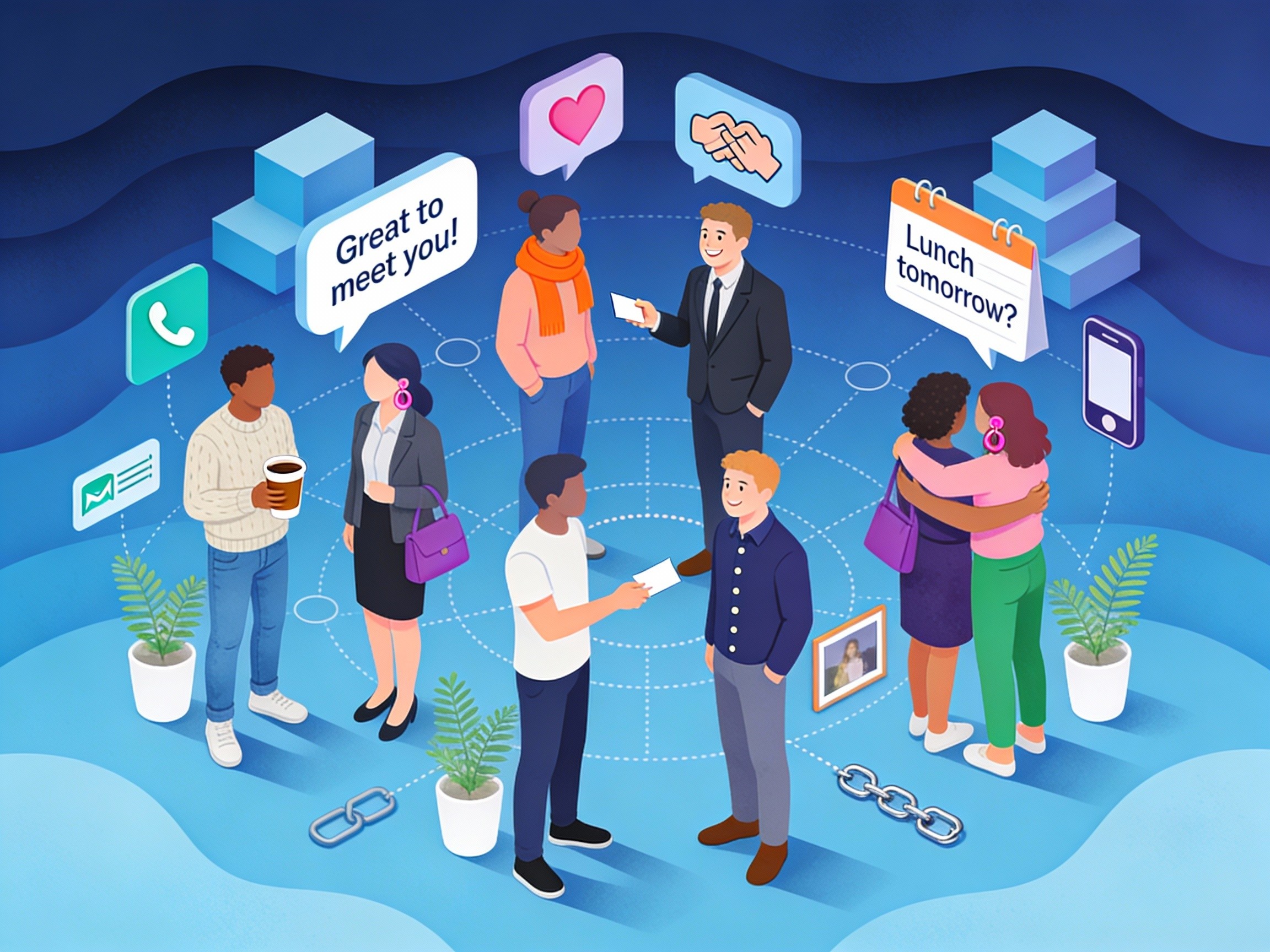
Networking was never meant only for business professionals. It was always meant for all of us.

Why networking feels uncomfortable
The biggest barrier was the belief that networking had to be transactional. Every conversation felt like it needed a purpose, a benefit, or a clear outcome. Instead of being present, interactions were constantly being evaluated.
That pressure turns curiosity into calculation and connection into performance. It also explains why many people, including students, shop owners, and creatives, feel out of place in so-called networking spaces.
What networking is actually about
Over time, a different truth became clear. Real networking does not begin with utility. It begins with attention. When someone feels heard and remembered, trust forms naturally.
The trick is not to network more. It is to remember better, follow up sooner, and keep the door open.
I. The Biggest Misconception About Networking
The everyday moments that were overlooked
Looking back, networking was happening quietly all along. Advice was being sought from seniors. Friends were being helped through problems. Introductions were made between people who could help each other. Meaningful conversations were followed up instead of forgotten.
None of those moments felt strategic. They felt human.
Why scale changed everything
As life became busier, the challenge was not meeting people. It was remembering them. Context blurred, details slipped, and follow-ups were missed. That is where tools like a business card scanner app, a mobile contact manager, or a simple SMB contact app started to matter, not to replace relationships, but to support memory.
Pause for a moment and think about the last few meaningful conversations you had. Are those people easy to find again, or are they slowly getting buried in chats, notes, and memory?

The Everyday Moments That Were Overlooked
Looking back, networking was happening quietly all along. Advice was being sought from seniors. Friends were being helped through problems. Introductions were made between people who could help each other. Meaningful conversations were followed up instead of forgotten.
None of those moments felt strategic. They felt human.
Why Scale Changed Everything
As life became busier, the challenge wasn’t meeting people. It was remembering them. Context blurred, details slipped, and follow-ups were missed.
That’s where tools like a business card scanner app, a mobile business card manager, or an SMB contact management app began to matter. Not to replace relationships, but to support memory.
If this feels familiar, pause for a moment and think about the last few meaningful conversations you had.
Are those people easy to find again, or are they slowly getting buried in chats, notes, and memory?
If staying intentional with relationships matters to you, tools like the Habsy app are designed to help you remember people and context without turning networking into work. You can explore how it fits into everyday life with Habsy Business Card Manager.
Read more :Hybrid Networking: How Business Cards and Digital Badges Power Modern Lead Capture
Where the Strongest Connections Came From
Some of the most valuable connections didn’t come from offices or meetings. They came from college corridors, community events, workshops, exhibitions, local shops, and shared interests.
Those conversations didn’t start with intent. They started with curiosity.
Why Informal Connections Last Longer
Without pressure to impress or convert, these relationships grew slowly and honestly. Over time, they turned into mentors, collaborators, suppliers, and loyal customers.
That’s when it became clear that networking outside formal business settings often creates stronger foundations, because it’s built on trust, not outcomes.

Why Connections Fade
Meeting people was never the issue. The real problem was keeping track of what mattered afterward. Business cards went missing. Notes were scattered across apps. Details like where someone was met or what was discussed faded quickly.
Most connections didn’t end because they lacked value. They ended because life moved on.
Why Memory, Not Effort, Was the Problem
This is where simple systems made a real difference. Features like scan business cards to CSV, multilingual business card OCR, and contact deduplication before CRM import weren’t about productivity. They were about preserving context.
Networking didn’t fail because conversations were bad.
It failed because memory faded.
If this resonates, this deeper perspective on how relationships scale beyond individual memory is worth reading:
Human Connection at Scale
From Career Tactic to Relationship Care
At some point, networking stopped being viewed as a career move and started being seen as taking care of the people you meet. That shift changed how conversations were approached.
This is where the Habsy app fit naturally into daily life. Not as a sales tool, but as a mobile business card manager that helps people remember conversations without effort. It didn’t push networking to happen more. It helped networking happen better.
Networking as a University Student (Placements and Internships)
For a university student, networking is closely tied to placements and internships. Conversations happen with placement cell coordinators, visiting recruiters, alumni, seniors who’ve interned before, and mentors during campus events.
With Habsy, a student can scan a visiting card or QR using a business card scanner app, add a short note like “placement recruiter, data role” or “alumni, referral shared,” and keep everything in one place. When application season begins, those contacts are easy to find, clear in context, and tied to real conversations.
Networking for a Shop Vendor
For a shop vendor, networking isn’t occasional. It’s daily. Suppliers, distributors, and regular customers directly affect how the business runs, yet these relationships often live loosely in phone contacts or memory.
Using Habsy as a business card manager for SMBs brings structure. Supplier cards are scanned once, contacts are tagged by product or payment terms, and duplicates are avoided through contact deduplication before CRM import. The result is less friction in everyday operations.
Networking for a Restaurant Owner
Restaurant owners meet people constantly. Food suppliers, delivery partners, event organizers, collaborators. Each conversation has operational value, but remembering details later is the challenge.
With Habsy, contacts can be saved with short context, business cards can be scanned to CSV for clean records, and connections from food expos can be captured using an event badge scanner app or trade show lead capture app. Everything stays accessible when it’s needed.
What Habsy Really Does
Whether Habsy is used as a business card scanner app, a mobile business card manager, an exhibition lead capture software, or a simple SMB contact management app, the purpose stays the same.
Habsy doesn’t automate relationships.
It protects them from being forgotten.
Today, networking is no longer seen as collecting contacts or building a professional image. It’s understood as building bridges between people, moments, and conversations that mattered.
A job title isn’t required to network well. Being a business professional isn’t a prerequisite. What matters is curiosity, consistency, and having a way to remember the people you meet.
Because networking was never meant only for business professionals.
It was always meant for all of us.
If you want a simpler way to keep track of the people you meet, without turning relationships into spreadsheets or CRMs, Habsy Business Card Manager is built for exactly that.
Capture conversations with context, stay organized, and follow up when it matters.
Explore Habsy and see how it fits into your daily networking.
FAQs:
1. Is networking only for business professionals?
No. Networking is not limited to business professionals. It happens in everyday life through conversations, relationships, and shared experiences across students, creators, vendors, restaurant owners, and community members. Anyone who keeps in touch with the right people, at the right time, is networking.
2. Why does networking feel uncomfortable for many people?
Networking often feels uncomfortable because it is framed as transactional or performative. The pressure to have a clear ask or outcome turns ordinary conversations into auditions. Networking that starts from genuine curiosity, and is supported by good follow-up, almost always feels lighter.
3. What is the biggest challenge in networking today?
The biggest challenge is not meeting people; it is remembering them. Conversations, context, and small details fade quickly without a system to capture and organize them. Most lost relationships are memory failures, not relationship failures.
4. How can students use a business card scanner app for placements?
Students can scan the cards of recruiters, alumni, and mentors, add a short voice note about the conversation, and set a reminder before applications open. When placement season starts, contacts are easy to find, the context is intact, and outreach feels natural rather than cold.
5. How does a contact manager help shop vendors and SMB owners?
A contact manager app gives small business owners a simple way to organize suppliers, distributors, and customers without a heavy CRM. Contacts can be tagged by category or payment terms, duplicates are merged, and follow-ups are scheduled, so daily operations get smoother and relationships do not slip.
6. Can a business card manager work for non-sales contexts?
Yes. The same workflow that helps sales teams capture leads at trade shows works for students at college fairs, restaurant owners at food expos, freelancers at conferences, and anyone meeting people regularly. The features stay the same; only the use case changes.
7. How does Habsy support everyday networking?
Habsy works as a simple system to capture, organize, and recall contacts across daily life. Scan a card or badge, add a voice note or tag, set a reminder, and the contact is searchable later with all the context attached. It is designed to make follow-ups easier without turning networking into work.