Blog
For a long time, better lead management seemed to mean using a bigger CRM more rigorously, capturing faster, syncing sooner, and making sure every field was filled. It felt like discipline.
Over time, a more uncomfortable but freeing realization set in. Most lead problems don’t happen inside the CRM at all. They happen in the moments before a lead is ever entered, when context is lost, intent is unclear, and follow-ups aren’t defined.

Stop pushing raw contacts into bulky CRMs. Learn how to capture, qualify, and organize leads first using Habsy, then export clean data to your CRM in 2026.
Early on, the instinct after meeting someone was simple: get them into the CRM as quickly as possible. Business card, badge scan, quick hello, log it first and decide later.
It looked organised, but it created noise. Contacts were stored before intent or urgency was clear. Pipelines filled up, duplicates crept in, and follow-ups turned generic because the original context had already faded.
What became clear was this. CRMs are built to track decisions, not to make them.
Things improved by pausing before the CRM step. Qualifying leads immediately after conversations, adding a short note about what mattered and what should happen next, made it easier to separate a casual contact from a real opportunity. Using a business card manager at this stage made that distinction obvious.
That same shift also changed how physical and digital cards were viewed. For anyone weighing those options, this guide on print vs digital business cards explains when each makes sense and how they influence follow-up quality.
II. Why Ditch CRM for Habsy Business Card Scanner
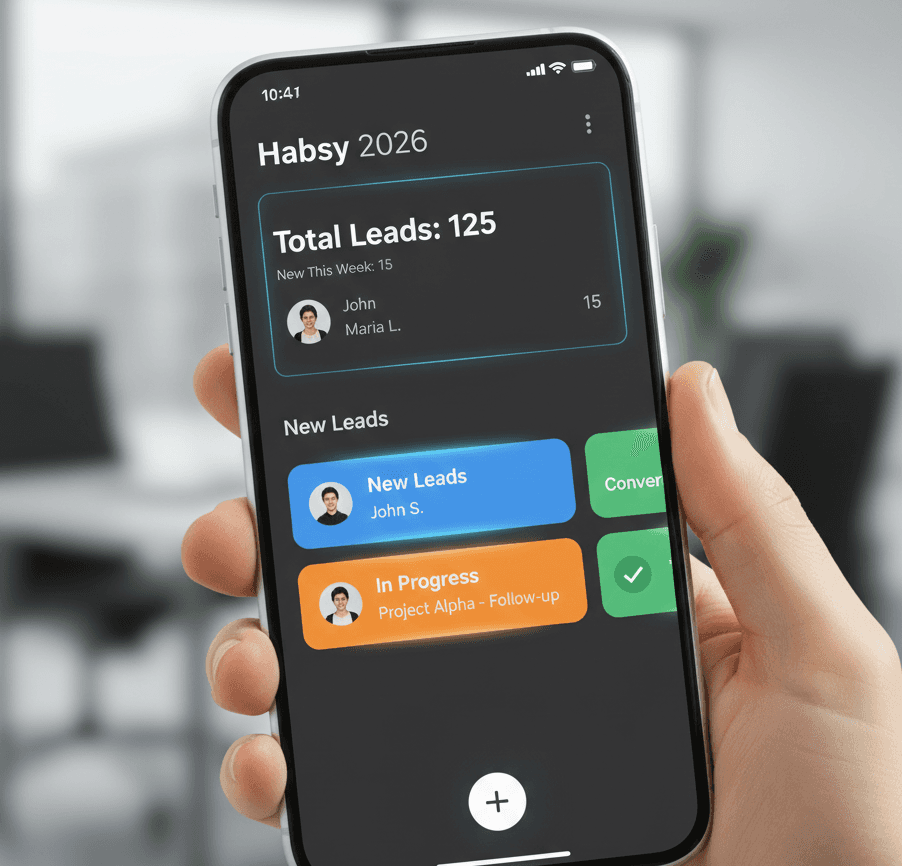
In fast-moving conversations, a system built for forecasting or reporting was never the real need. What mattered was something usable in the moment. A mobile app made that immediately clear. When leads live on the phone, capturing context, categorizing intent, and organizing contacts can happen before memory fades.
That is where Habsy fits naturally. It helps teams capture, organize, enrich, and follow up on leads quickly, even in busy event environments.
Batch scanning reduces time spent scanning cards one by one after events
QR badge scanning avoids manual entry during high-footfall moments
Voice notes with transcription preserve conversation context while it is still fresh
Intent signals and reminders help prioritize leads and schedule follow-ups instantly
Categories, and Intent Signals organize and segment leads in real time
NFC and digital QR business cards enable fast two-way contact exchange without paper cards
Offline capture keeps the workflow running even without stable internet connectivity
Duplicate detection and review help identify duplicate contacts before export
CRM integrations and CSV exports move clean, structured leads into the workflow tool of your choice
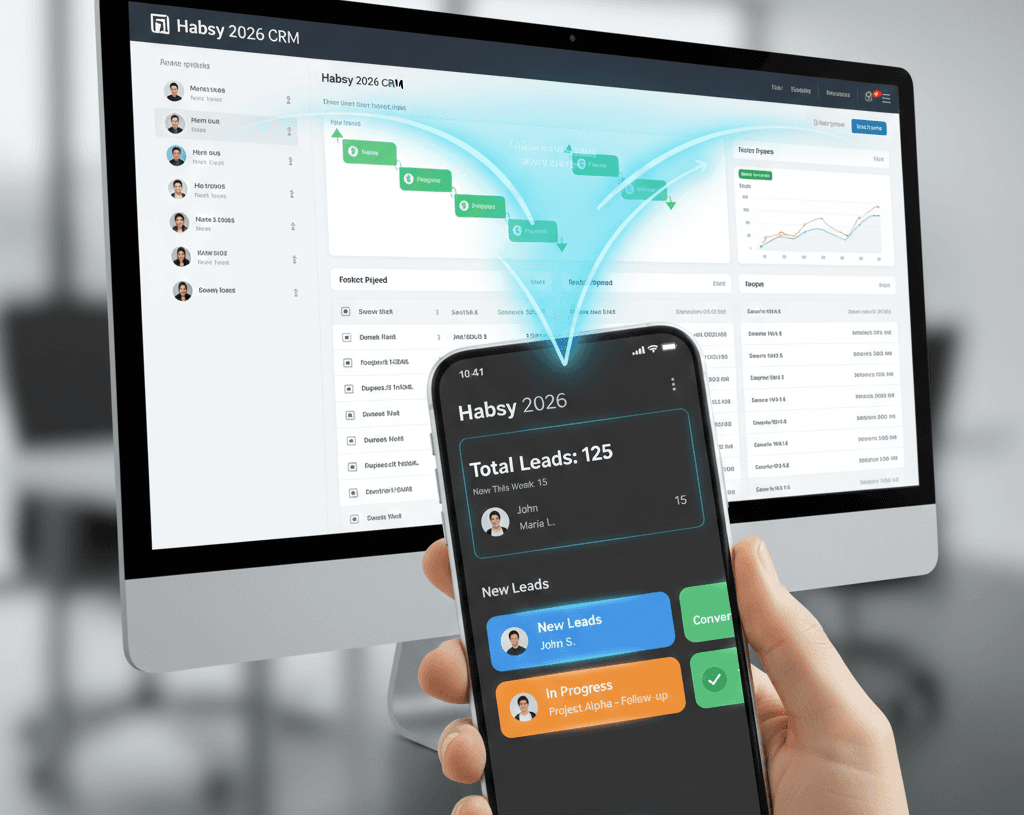
CRMs never disappeared from the workflow. What changed was where they were used.
Instead of starting there, Habsy became a lead preparation layer, a place where business cards, badge scans, and quick contacts could be captured, organized, and enriched while their value was assessed. Leads could be reviewed once, cleaned up, and filtered for relevance before they ever touched a CRM.
What made this handoff simple was CSV export. Once leads were qualified and organised, they could be exported in a clean, structured CSV and imported into any CRM without friction. There were no forced integrations or partial syncs, just control over what moved forward and when.
By the time leads reached the CRM, they were already owned, prioritized, and ready for action, not raw guesses pushed downstream too early.
QR digital business cards made networking faster and more reliable in real situations.
Instead of typing details or taking photos of cards, a quick QR scan shared accurate contact information instantly. That speed mattered in short conversations and crowded environments, where every extra step created friction.
They also proved more efficient. Details stayed up to date, errors were reduced, and every exchange landed in a usable format, ready to organise instead of recreate.
Most importantly, QR sharing was reliable. It worked consistently across devices and environments, even when connectivity wasn’t perfect. That reliability turned quick interactions into dependable leads and made follow-up easier and more intentional.
When every exchange becomes faster and more dependable, the next question naturally follows. Who controls that data and how securely it’s handled.

What ultimately changed the approach wasn’t abandoning CRM, but redefining what it should be responsible for.
Lead capture, qualification, and follow-up work best when they happen close to the conversation, not inside a system built for reporting and forecasting. By separating these early moments from long-term storage, the workflow became simpler and more deliberate. Habsy fit naturally into this gap, acting as a lightweight capture and organisation layer instead of another system to maintain.
Once interactions no longer had to be pushed into a CRM immediately, lead management stopped feeling like administrative work. Each contact moved forward with intent, context, and ownership already defined, making every next step more purposeful. This shift also made it far easier to design a clear, repeatable follow-up process, which is exactly what I break down in this step-by-step guide to building a Day-1 follow-up workflow.
In 2026, the best lead systems aren’t the biggest or the most complex. They’re the ones that respect how relationships actually begin.
That means starting lighter, qualifying earlier, and involving the CRM only when it adds real value. Using Habsy as a business card manager makes that possible, without losing speed, context, or control.
The CRM still matters.
It just doesn’t need to be the first thing anymore.
Q1. Why do most lead management problems happen before the CRM?
Most lead issues occur before data reaches the CRM because context, intent, and follow-up details are often lost during initial interactions. Without capturing this information early, CRM data becomes incomplete and less actionable.
Q2. Is it better to qualify leads before adding them to a CRM?
Yes. Qualifying leads before entering them into a CRM helps reduce noise, prevent duplicates, and ensure that only relevant, high-intent contacts move into the pipeline.
Q3. How does a mobile-first lead capture workflow improve results?
A mobile-first workflow allows users to capture contacts, add notes, and organize leads instantly during conversations. This preserves context and enables faster, more personalized follow-ups.
Q4. What role does CSV export play in lead management?
CSV export allows leads to be cleaned, structured, and qualified before being imported into a CRM. It ensures flexibility and control over what data moves into long-term systems.
Q5. Why is early follow-up critical in lead conversion?
Early follow-up, ideally within 24 hours, keeps the conversation fresh, improves response rates, and increases the chances of converting leads into business opportunities.