AI Business Card Scanner: Where Automation Ends and Sales Leadership Still Decides Outcomes
AI business card scanners make contact capture faster, but they don’t create pipelines on their own. What matters is capturing intent, deciding follow-ups early, and keeping data clean. This article explains where automation helps, where human judgment matters, and how tools like Habsy support that workflow.
Marcus Chen7 min read
Introduction
I started using a mobile app business card solution to solve a recurring operational issue.
After the events, too much time was lost between collecting contacts and taking the first action. Physical cards, mobile visiting cards, and digital business cards were scattered across desks, phones, and spreadsheets. Sales teams received lists late and often without context. Follow-ups suffered as a result.
The promise of any business card manager and digital business card app is simple.
Speed, structure, and consistency.
Automation delivered on that promise.
What it did not deliver, until we changed our operating model, was predictable sales outcomes.
This article explains where a modern business card scanner app works, where automation stops, and why human judgment still determines results, especially for events, exhibitions, and SMB teams.
I. What Automation Handles Well and Reliably
Automation is most effective when it removes repetitive manual work. It speeds up contact capture, organizes information consistently, and prepares data for follow-up, allowing sales teams to focus more on conversations than administration.
A. Speed at the Point of Capture
Speed is where automation shines.
At enterprise events and trade shows, manual data entry is not realistic. Conversations are brief. Booths are busy. Teams need to keep moving.
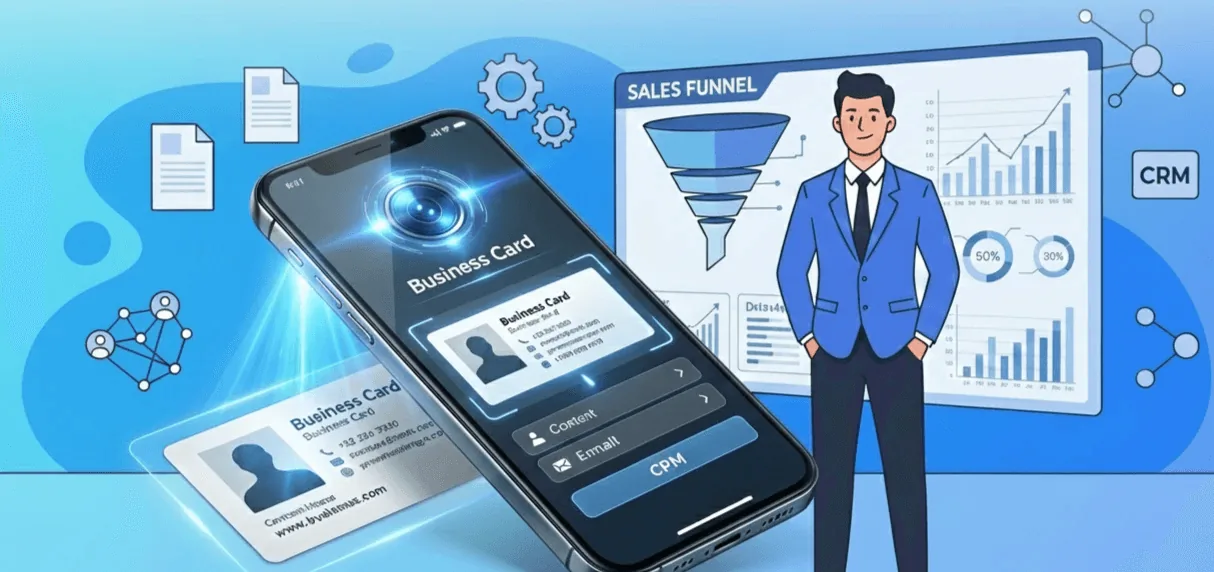
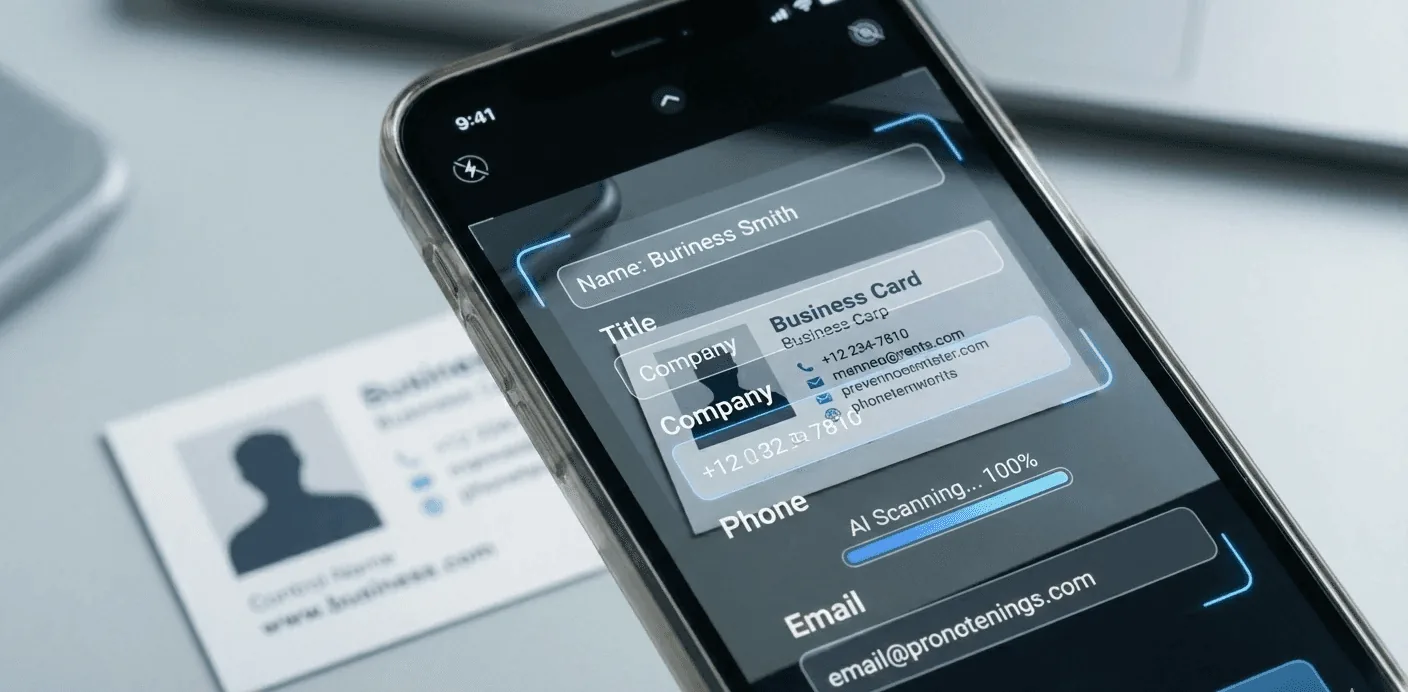
A mobile business card scanner app removes friction by capturing cards in seconds without interrupting engagement. With multilingual business card OCR, teams can scan cards across regions and markets without slowing down.
Names, companies, emails, and phone numbers are digitized fast enough that capture is no longer the bottleneck.
If a tool slows teams down, it will not be used consistently.
B. Post-Event Throughput and Time-to-Action
Momentum is usually lost after the event, not during it.
Card piles sit untouched while teams return to daily work. Outreach is delayed by days or weeks. By the time follow-up begins, intent has already cooled.
Batch scanning and the ability to scan business cards to CSV changed that pattern. Entire stacks could be processed in one session, making next-day review and action realistic.
Automation did not improve lead quality.
It protected timing.
If you are comparing physical cards and digital alternatives in this phase, this breakdown is useful:
Are business cards a waste of money? Print vs digital cards
Automation protects speed and timing, not outcomes.
C. Centralised, Searchable Records
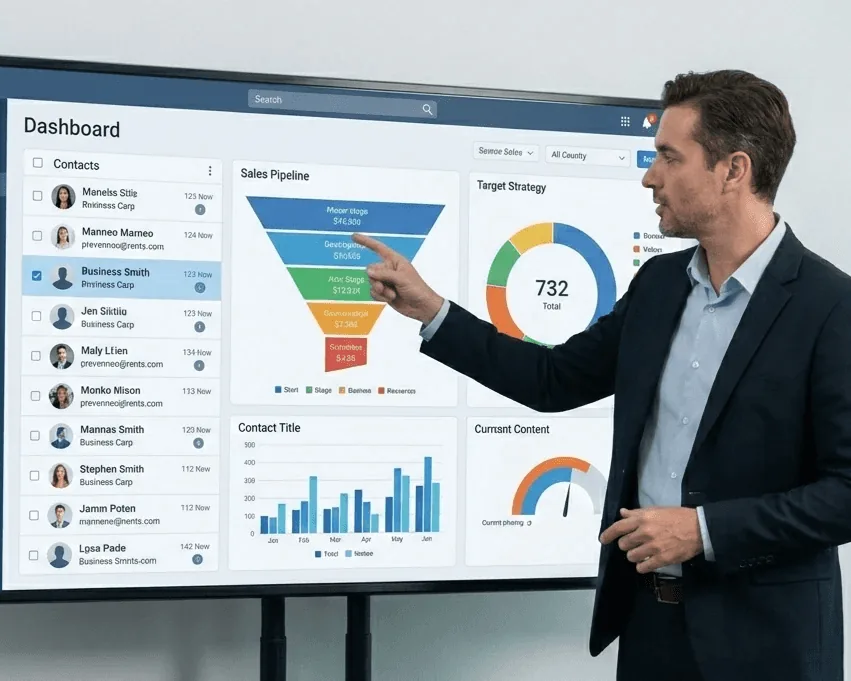
Once scanned, contacts move into a single, searchable system.
Instead of fragmented files, teams can manage physical cards, mobile visiting cards, and digital business cards in one place. This is where a strong SMB contact management app or business card manager for SMBs becomes valuable.
Operational clarity improves.
Direction does not.
A searchable list is only as useful as the information captured within it.
Keep the momentum
Turn captured contacts into timely follow-up.
Keep the note, intent and next action with every contact so your team knows what to do next.
II. Where Automation Is Insufficient for Sales Outcomes
While automation improves efficiency, it cannot replace human judgment. Buying intent, urgency, qualification, and next steps are discovered through conversations, making people, not software, responsible for turning captured contacts into real sales opportunities.
A. Context Is the Missing Variable
After one event, we reviewed a contact list that looked strong on paper.
The titles were senior. Companies were relevant. Industries matched our target market.
Sales asked a simple question.
“Which of these should we prioritise?”
The answer was not in the scanned data. It was in the conversations that had taken place, budget discussions, timelines, and internal decision dynamics.
AI captured text accurately.
It did not capture intent.
B. Qualification Cannot Be Automated
Automation cannot infer the signals that determine lead priority.
Buying urgency reflects how soon a decision is expected.
Decision-making authority indicates whether the contact can approve or influence the purchase.
Product relevance shows how closely the need aligns with what is being offered.
Competitive context captures which alternatives are being evaluated and on what basis.
These signals surface only in conversation.
They are situational, time-sensitive, and rarely explicit. No scanner, regardless of OCR accuracy or whether it is an event badge scanner app, can derive them from a card alone.
When qualification is not captured at the point of interaction, all contacts enter the system with equal weight. Sales teams are then forced to rediscover information that already existed.
C. Follow-Up Discipline Is Set Early or Lost
Missed follow-ups are rarely caused by weak reminders.
They are caused by missing decisions.
If no next action is defined when the conversation ends, the lead enters a general backlog. There is no urgency, no owner, and no timeline. Context fades quickly.
This is a common failure point for teams using even the best business card scanner apps without a follow-up workflow built in.
D. Data Quality Requires Active Governance
Before exporting leads to CRM systems, we added a deliberate review step.
Duplicates were resolved. Missing fields were corrected. Ambiguous records were clarified. This step of contact deduplication before CRM import proved critical.
AI could surface issues.
It could not resolve them responsibly.
Questions around data ownership and control become especially important here:
Your Data, Your Control: Privacy With Habsy
Clean data before CRM saves far more effort later.
III. The Operating Model That Scaled
What ultimately worked was a deliberate division of responsibility between automation and human judgment. Instead of expecting a single tool to solve everything, the workflow was designed so each step was handled by what does it best.
A. Automation for Speed and Structure
Automation was used where consistency and scale mattered most. Physical cards, mobile visiting cards, and digital business cards were captured quickly, formatted uniformly, and stored in a central system. This removed manual data entry from the workflow and ensured every contact was searchable, exportable, and ready for review.
B. Humans for Context and Qualification
Context, intent, and relevance were captured by the person having the conversation, in the moment it occurred. Details such as buying urgency, decision-making role, and fit were noted while the interaction was still fresh. These signals could not be inferred later and were intentionally kept as human inputs.
C. Early Ownership and Follow-Up Decisions
Each contact left the event with a clear owner and a defined next step. Follow-up was not deferred or left ambiguous. By deciding responsibility and timing immediately, leads avoided falling into generic backlogs where momentum is usually lost.
D. Single Review Before Handoff
Before exporting to CRM or sales systems, data was reviewed once to resolve duplicates, correct gaps, and validate quality. This ensured clean handoff downstream and prevented long-term CRM hygiene issues that are costly to fix later.
This balance between automation and judgment kept leads moving. Capture was fast, decisions were timely, and handoff was clean. As a result, contacts progressed from events to follow-up without stalling between capture and action.
IV. Why This Matters for Sales Leaders
Automation in contact capture reduces operational friction. It standardizes intake and shortens the time between a conversation and a usable record, whether teams are exchanging a digital card, collecting a physical one, or scanning leads at a trade show.
That speed matters, but speed alone does not produce revenue.
What determines outcomes is what happens immediately after the interaction, not how quickly details are stored.
Below are common scenarios where this distinction becomes visible.
1. High-Volume Events With Limited Sales Capacity
At busy events, teams often collect far more contacts than sales can realistically pursue.
When every interaction looks the same in the system, sales is forced to guess. Priority becomes a function of job titles or company names instead of buying signals.
Leaders who treat capture as an operating discipline require one additional step at intake: a clear signal of relevance. Even a rough indication of interest or timing is enough to prevent sales time from being diluted across low-probability conversations.
2. Multi-Rep Teams and Ownership Confusion
In larger teams, leads are often touched by multiple people across different shifts or days.
Without early ownership and context, follow-ups become fragmented. Sales reaches out without knowing who spoke to the prospect or what was discussed, which erodes credibility and momentum.
Effective leaders insist that ownership and intent are assigned before data moves forward. This prevents internal confusion and preserves continuity for the buyer.
3. Delayed CRM Entry and Context Loss
Many teams delay review and CRM entry until days after an event.
By then, memory has faded and interpretation is replaced by assumptions. Notes become generic. Follow-ups sound cold, even when the original conversation was warm.
Sales leaders who optimise for outcomes compress this window. They prioritise early review and decision-making, even if the data is not yet perfect, because context decays faster than accuracy improves.
4. Data Quality vs Sales Readiness
It is common to focus heavily on cleaning, enriching, and normalising data before handoff.
While data quality matters, over-optimising at this stage often delays action. Sales readiness is not achieved through completeness alone, but through clarity.
Leaders who understand this allow sales to act on partially enriched data as long as intent and next steps are clear. Refinement can happen later without sacrificing momentum.
5. Security, Trust, and Long-Term Control
As contact data becomes more central to revenue operations, concerns about ownership and portability grow.
Sales leaders are increasingly accountable for how relationship data is stored, accessed, and transferred across systems. When control is unclear, adoption slows and teams hesitate to rely on the system fully.
Treating capture and follow-up as a discipline includes choosing workflows that protect ownership, allow clean handoffs, and do not lock critical data behind opaque processes.
V. Final Position
AI business card scanners are effective when used for fast and consistent digitisation of contact data. They are not designed to interpret intent, assign priority, or enforce follow-through. Those outcomes depend on decisions made by people, at the right moment.
This is where Habsy Business Card Manager fits in. This App combines business card scanning, digital business cards, event badge scanning, and follow-up workflows into a single business card manager for Small and Medium-sized Business (SMBs) and sales teams. It supports quick capture, enables teams to scan business cards to CSV, handles multilingual business card OCR, and prompts context, qualification, reminders, and review before CRM handoff.
By bridging capture and action, Habsy business card manager helps teams turn contact collection into pipeline, without replacing human judgment.
Try Habsy to experience a capture-to-action workflow built for real sales teams.
Frequently Asked Questions
What does an AI business card scanner actually automate?
AI business card scanners automate the capture of contact details like name, company, email, and phone number. Tools like Habsy go further by organizing these contacts instantly, making them searchable and ready for follow-up without manual entry.
Why is automation alone not enough for sales outcomes?
Automation improves speed but does not capture intent, urgency, or decision-making signals. Habsy bridges this gap by allowing teams to add notes, tags, and context during conversations so leads are qualified before follow-up.
What role does human judgment play in lead conversion?
Human judgment is essential for identifying buying intent, prioritizing leads, and defining next steps. Habsy supports this by prompting users to capture context, assign ownership, and set reminders at the moment of interaction.
How can teams prevent losing context after events?
Context is best preserved at the time of capture. With Habsy, teams can add notes, voice memos, and intent signals immediately, ensuring follow-ups are relevant and not based on guesswork later.
How does Habsy improve the capture-to-follow-up workflow?
Habsy combines business card scanning, QR sharing, event badge capture, and follow-up workflows in one system. It enables teams to capture contacts quickly, qualify them with context, and export clean, CRM-ready data for immediate action.
Keep the momentum
Turn captured contacts into timely follow-up.
Keep the note, intent and next action with every contact so your team knows what to do next.